
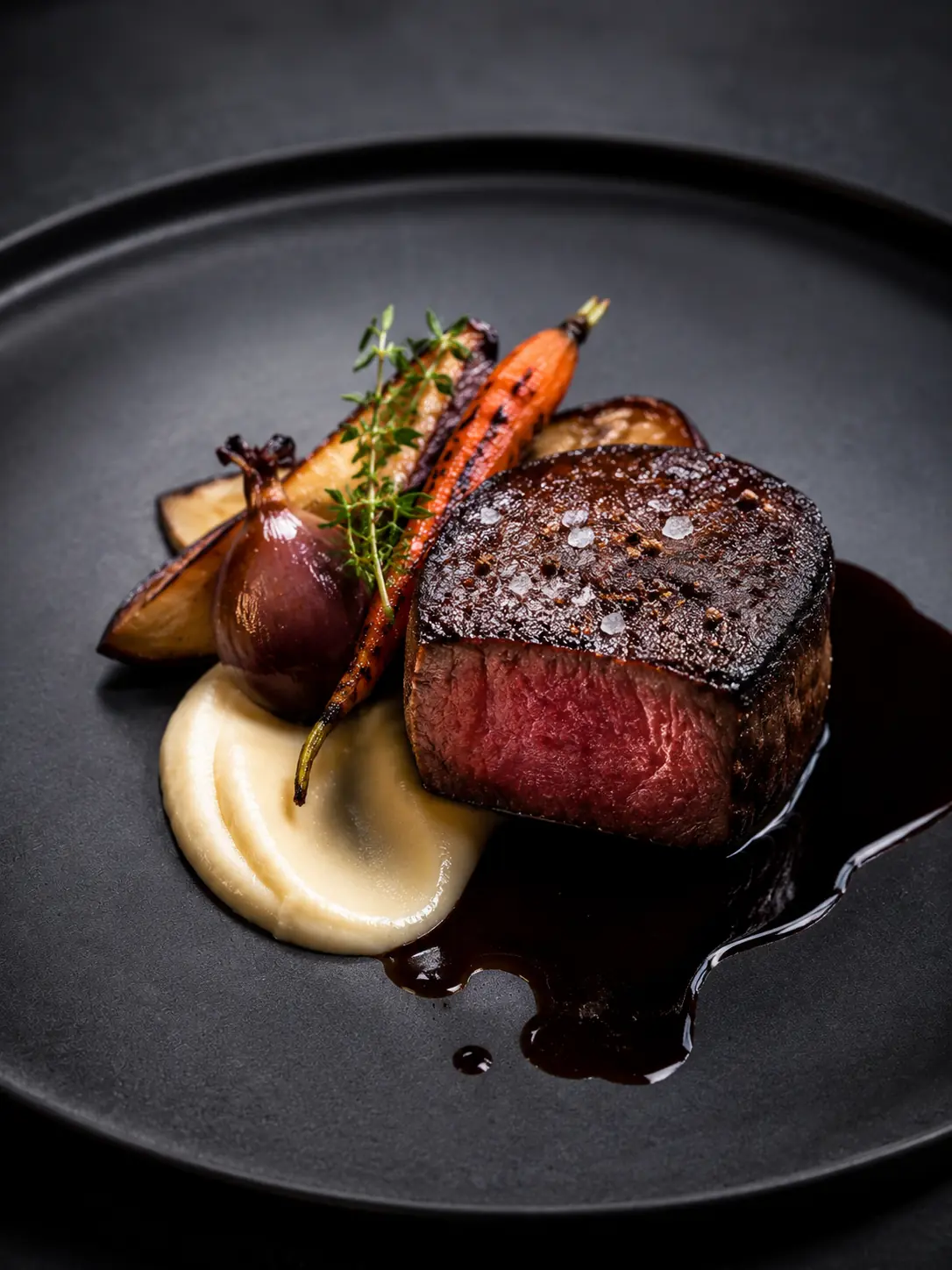
 Steak & doneness
FOOD PLATING IDEAS · MEAT
How to plate meat beautifully.
The right stage for every cut.
Plate steak, fillet and roasts with confidence. Find ideas for roast pork, roast beef and braised dishes as well as poultry and lamb. Focus on the cut, clearly grouped sides and sauce that complements the meat.
Steak & donenessHOW TO PLATE MEAT
Four principles that work for many meat dishes.
Whatever the specific dish, four decisions usually shape the plate: what should remain visible on the meat, how the sauce is placed, where the sides sit and how much negative space the composition needs.
Show the cut and doneness
A clean cut makes steak, fillet and chicken instantly more appetising. Face the cut surface towards the viewer and let juicy meat rest before slicing.
Match the sauce to the dish
A strong jus works as a precise pool or line. Braised dishes can carry more sauce, as long as the meat remains clearly visible.
Group the sides
Purée, potatoes and vegetables feel calmer in a few deliberate groups than when scattered around the meat. The main ingredient stays in focus.
Use the natural shape
A compact fillet needs a different balance from long slices, a chicken breast or a piece of roast. Build the composition from the meat’s natural form.
Roasts on the plate
How to plate a roast: meat, gravy and sides
Roast pork, roast beef, Sauerbraten and braised roasts share a basic approach: make the meat the focus, group the sides and use gravy to connect them. Adjust the cut, treatment of the crust and amount of sauce to the dish.
Choose the right cut
Cut firmer roasts into even, slightly overlapping slices. Serve very tender braised meat as a larger intact piece if slicing would make it fall apart.
Keep sides compact
Place dumplings or potatoes beside the meat. Purée can form a base; keep red cabbage or other vegetables in a separate group. Use a few coherent areas rather than many scattered piles.
Place gravy around the crust
Place gravy beneath or beside the slices. Keep pork crackling dry. Sauerbraten and braised roasts can take more gravy, provided the meat and sides remain clearly visible.
Finish with space around the food
Keep the rim clean, show the cut surfaces and add only ingredients that belong to the dish. A classic roast often needs no extra decoration; a clear arrangement is enough.
MEAT DISHES · PLATING
Which meat dish would you like to plate?
Not every meat dish needs its own page. What matters is the type of dish: seared, braised, roasted or poultry. These sections give practical plating principles and concrete examples for each.
Braised dishes & classics
Dark sauce, tender meat and hearty sides can quickly make a plate feel heavy. Keep the meat visible, group the sides and use the sauce to connect the elements rather than cover everything.
Sauerbraten plating →
Arrange clean slices with a slight overlap. Run the sauce beneath and beside the meat, then place dumplings, purée or red cabbage as a clear secondary focus.
Burgundy-style roast
Use the dark glossy sauce as a deliberate pool and place the roast on or just beside it. Pale sides and green vegetables create useful contrast.
Beef roulade plating →
Leave a roulade whole or cut it diagonally to reveal the filling. Guide the sauce around it and group the sides instead of scattering them around the plate.
Beef stew plating →
Plate it compactly in a deep dish and keep attractive pieces of meat visible on top. Set the side separately or as a calm base so the dish does not look randomly mixed.
Boeuf Bourguignon
Layer visible pieces of beef, mushrooms and vegetables instead of hiding everything under the sauce. A smooth purée or small potato element gives the braise visual calm.
Pot roast
Overlap the slices slightly, run sauce underneath or to the side and add one compact side as a counterpoint. This keeps the roast as the clear focal point.
Pork cheeks
Set the cheeks slightly offset on a small pool of sauce. Place purée or polenta neatly beside them, add vegetables with intention and spoon on the glossy braising jus just before serving.
Involtini
Slice the involtini diagonally or present them as whole rolls so the filling or shape remains visible. Keep the sauce underneath or to one side and arrange the accompaniments as a calm group.
How to plate roasts
For pork roast, veal roast, roast beef or crisp-skinned roasts, the shape of the cut should drive the composition. Show a clean cut surface, keep crisp skin dry and visible, and place sauce beside rather than over it.
How to plate roast beef with gravy
Slice the beef across the grain into even pieces. Stagger two or three slices, place potatoes or dumplings to one side and guide gravy along one edge of the meat. If the roast falls apart easily, serve a larger piece over purée.
How to plate roast pork
Make clean, slightly overlapping slices the focal point. Place dumplings or purée neatly beside them and guide the sauce beneath and alongside the meat.
How to plate crispy pork roast
Keep the crisp crackling fully visible and dry. Place sauce only beneath the meat or separately, and group hearty sides into a few deliberate clusters.
How to plate roast veal
Loosely layer thin slices and connect them with a light, carefully portioned sauce. Tender vegetables and a small potato element preserve the elegant character.
How to plate roast beef
Show the pink centre by staggering the slices. Keep warm sides compact, or pair cold roast beef with just a few fresh, crisp accents.
How to plate meatloaf
Stand up an even slice or place it at a slight angle. Purée creates a calm base, while sauce and vegetables add deliberate shine and colour.
How to plate steak & fillet
Steak, beef fillet, pork tenderloin and veal fillet benefit from a clear focal point and a visible cut surface. Purée, potatoes and vegetables work best in two or three deliberate groups.
Pork tenderloin
Cut the tenderloin into even medallions and overlap them slightly or arrange them in a clean line. A creamy side provides structure; guide the sauce sparingly alongside the meat.
Fillet steak and beef tenderloin
Present the fillet whole or with one clean cut. A few precise sides, a controlled pool of sauce and generous negative space emphasise the premium meat.
Rump steak
Slice across the grain and fan the meat to reveal the doneness. Keep the fat edge visible, with sauce and sides positioned as distinct counterpoints.
Entrecôte and ribeye
Show the marbling with a few broad slices. Reduce rustic sides and use sauce selectively so the steak’s structure remains the focus.
Sirloin steak
Cut even slices and arrange them in a slightly staggered line. A creamy element and fresh vegetables balance the steak’s compact shape.
T-bone and porterhouse steak
For a large steak, remove the meat from the bone, slice across the grain and rebuild it alongside the bone. A platter or large plate keeps the cut recognisable.
Veal fillet
Veal fillet looks especially elegant when a few cleanly cut pieces are paired with a delicate sauce and restrained accompaniments. Negative space keeps the tender meat in focus.
How to plate poultry & lamb
Chicken breast, duck breast and lamb usually benefit from more lightness on the plate. Use fresh vegetable colours, controlled sauce and enough negative space; sliced breast meat can show the doneness clearly.
Chicken breast
Serve the breast whole or sliced diagonally over a creamy component. Keep crisp skin visible and use colourful vegetables as a concentrated counterpoint.
Duck breast
Slice the duck breast on the diagonal and fan it out. Use a fruity or rich sauce as a narrow base and group the vegetables with deliberate space around them.
Turkey breast
Overlap juicy slices slightly and add colour with a vivid sauce or robust vegetable. Small, separated sides prevent the plate from appearing dry.
Goose breast
Keep the crisp skin facing up and place dark sauce only beside or beneath it. Use cabbage, fruit and dumplings as compact accents rather than spreading them around.
Chicken leg
Set the leg diagonally so its shape and skin remain visible. Group sides to one side and keep sauce near the lower part of the meat to preserve the crisp appearance.
Lamb loin and fillet
Cut the pink meat into a few substantial slices and stagger them loosely. Purée, herbs and a dark jus create contrast without hiding the lamb.
Rack of lamb
Lean individual chops upright or cross two pieces. The bones add height; keep the herb crust, jus and vegetables from obscuring this distinctive silhouette.
Leg of lamb
Loosely layer thin slices and reveal several pink cut surfaces. Add rich jus, beans or potatoes in clear groups rather than distributing everything across the plate.
Practical plating examples
Three dishes. Three clear arrangements.
These examples show how meat, sides, sauce and a suitable accent work together on the plate. Each dish comes with three steps you can follow.
Practical plating examples
How to plate roast pork with dumplings and red cabbage
Two staggered slices of pork, compact dumplings and a defined portion of red cabbage form three clear groups.
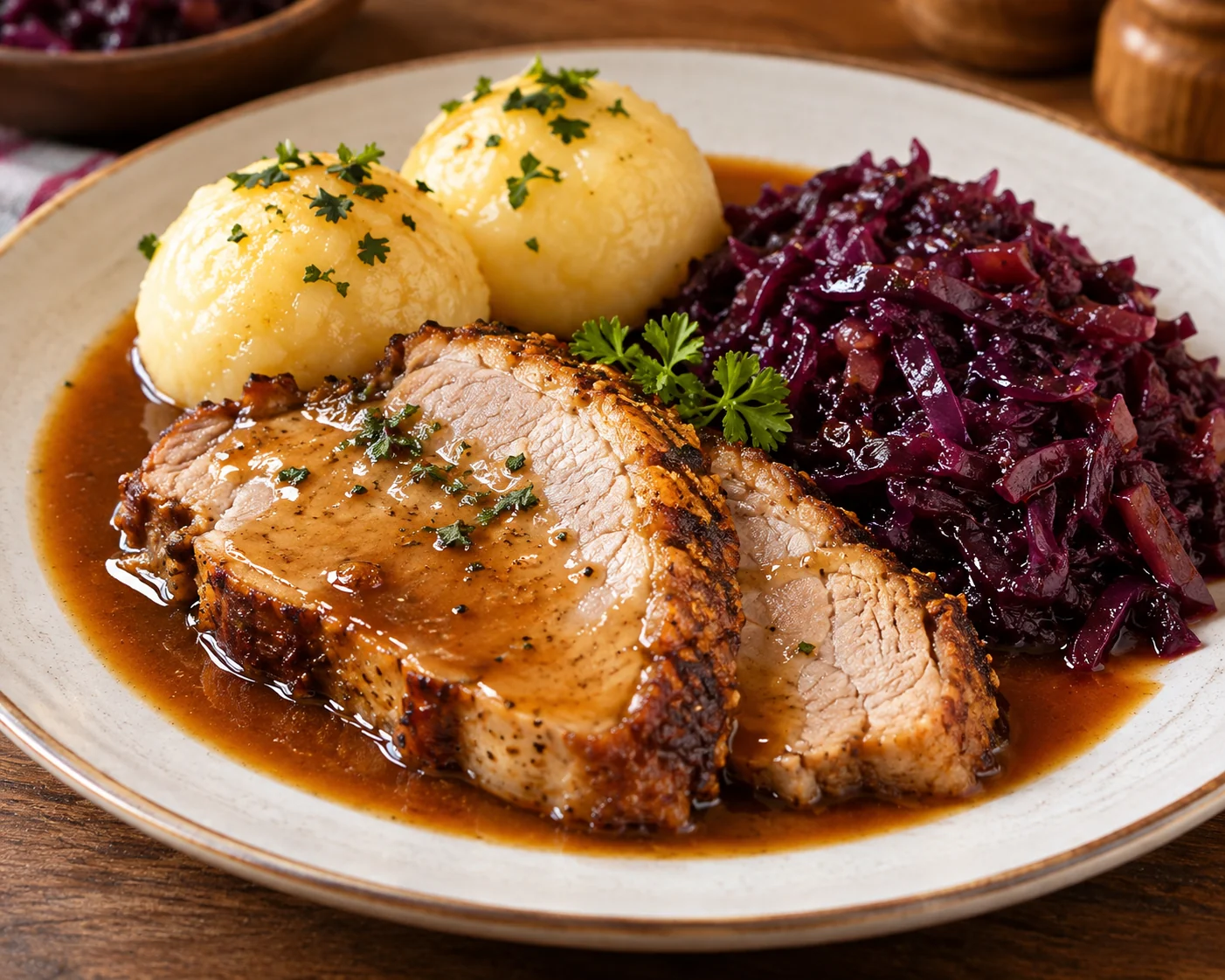
Plate step by step
- Place the dumplings and cabbage
Set the dumplings close together towards the back of the plate. Shape the cabbage into a compact portion beside them with two spoons. Drain it so its liquid does not run into the gravy.
- Fan the pork slices
Overlap two even slices slightly at the front. Turn the cut surfaces towards the guest and leave some plate visible between the meat and sides.
- Add gravy and finish
Spoon gravy mainly around the lower edge of the meat. Use a little parsley if it belongs to the dish, clean the rim and serve. For pork with crackling, keep gravy away from the crisp crust.
Practical plating examples
How to plate roast beef with ribbon pasta, pear and lingonberries
The beef slices establish the direction. Ribbon pasta forms a loose group, while pear and lingonberries create one connected fruit accent.
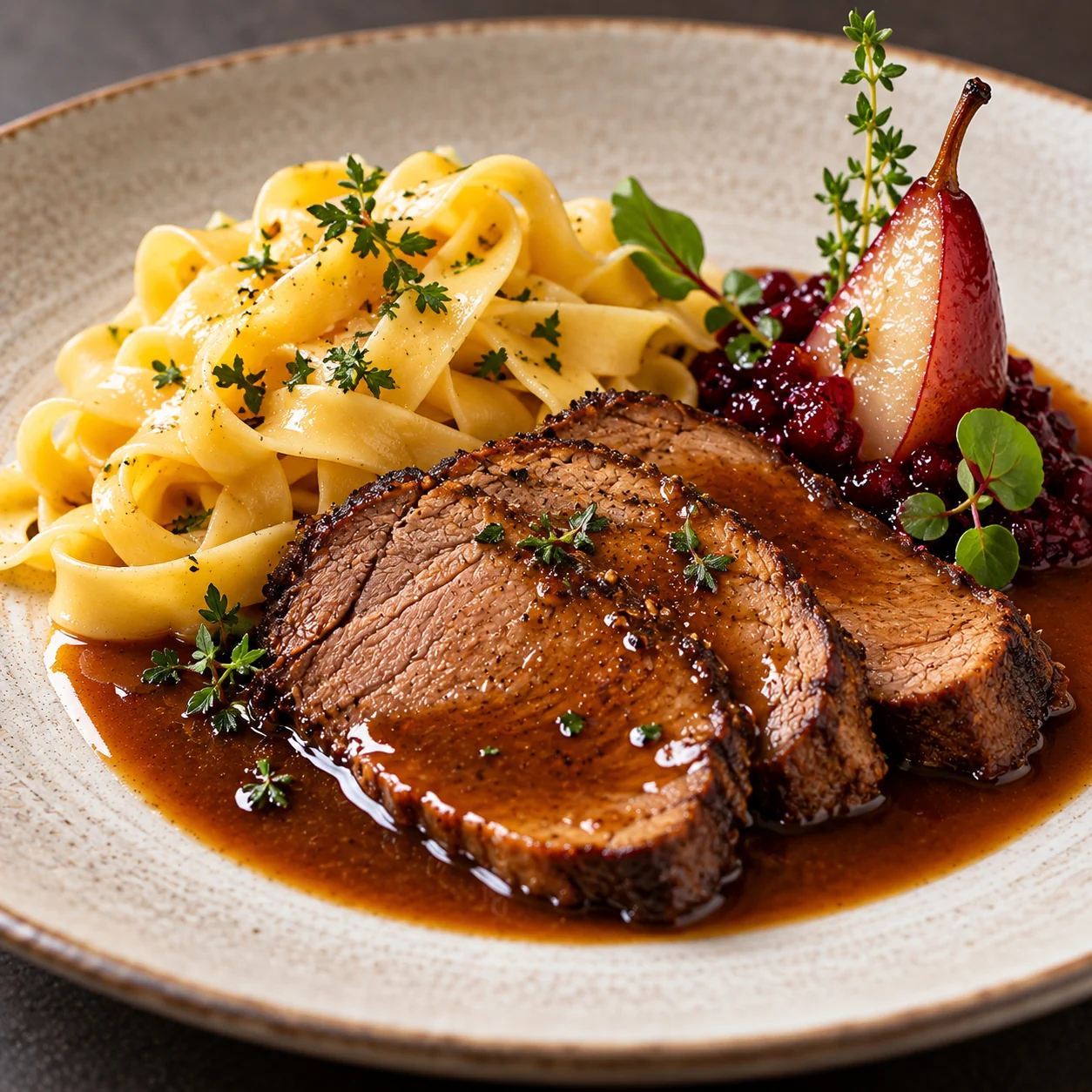
Plate step by step
- Gather the ribbon pasta
Use tongs to twist the pasta into a loose portion towards the back of the plate. Do not press it tightly; leave some broad ribbons visible.
- Stagger the beef slices
Cut the roast across the grain and overlap two or three slices slightly at the front. Keep part of the pasta visible behind the meat.
- Add pear, lingonberries and gravy
Place the pear and lingonberries together beside the pasta. If needed, trim the base of the prepared pear half so it stands securely. Guide gravy along the beef and add herbs only if they belong to the dish.
Practical plating examples
How to plate duck breast with saffron rice and orange
Fanned duck slices, a compact portion of rice and orange bring shape and colour contrast to the plate. Keep the skin and cut surfaces visible.
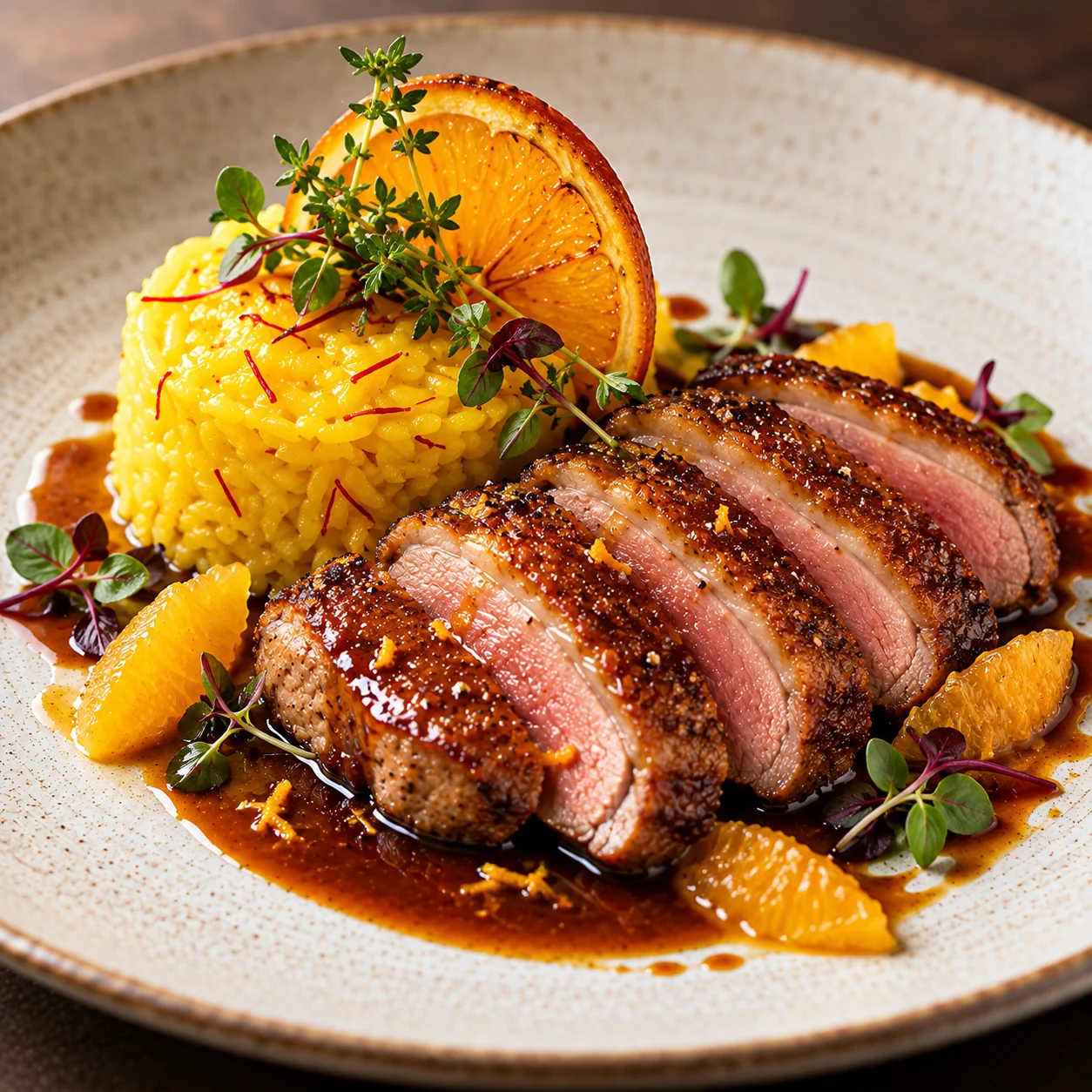
Plate step by step
- Shape the saffron rice
Loosely fill a lightly greased ring with rice and position it towards the back of the plate. Lift off the ring carefully. Without a ring, use a spoon to form a compact portion.
- Fan the duck breast
After resting the duck, cut even diagonal slices and fan them in front of the rice. Face the skin and cut surfaces upwards.
- Add orange and sauce
Lean the orange slice securely against the rice and place a few orange pieces beside it. Put sauce beside or beneath the meat, keeping crisp skin as dry as possible. Add herbs sparingly and clean the rim.
PLATINGSTUDIO INSPIRATION
Four kinds of meat. Four distinct compositions.
These examples solve different plating tasks: steak with visible doneness, compact fillet, lighter poultry and a classic braised dish.
Steak & doneness Fillet & precision
 Poultry & lightness
 Roast & sauce
AD · AMAZON AFFILIATE LINKS
The right tools for the finishing touch
Selected tools for plating this dish.
Carving knifeCut meat into clean, even slices.Chef’s tongsPosition meat slices and garnishes with control.Sauce spoonAdd sauces neatly and with control.
As an Amazon Associate I earn from qualifying purchases.
Your meat. Your sides. Your plate.
Describe your exact meat dish, sides and sauce. PlatingStudio develops three personalised plating ideas and a clear step-by-step guide.