
A low risotto bed
Finish the risotto just before serving and check its consistency. Spoon it into a warm, wide shallow bowl. Move the plate gently to form a low bed. Do not compress flowing risotto into a firm ring.
Plate creamy risotto in a shallow bowl, arrange shrimp or fish on top and keep the rice flowing rather than shaping a firm tower.
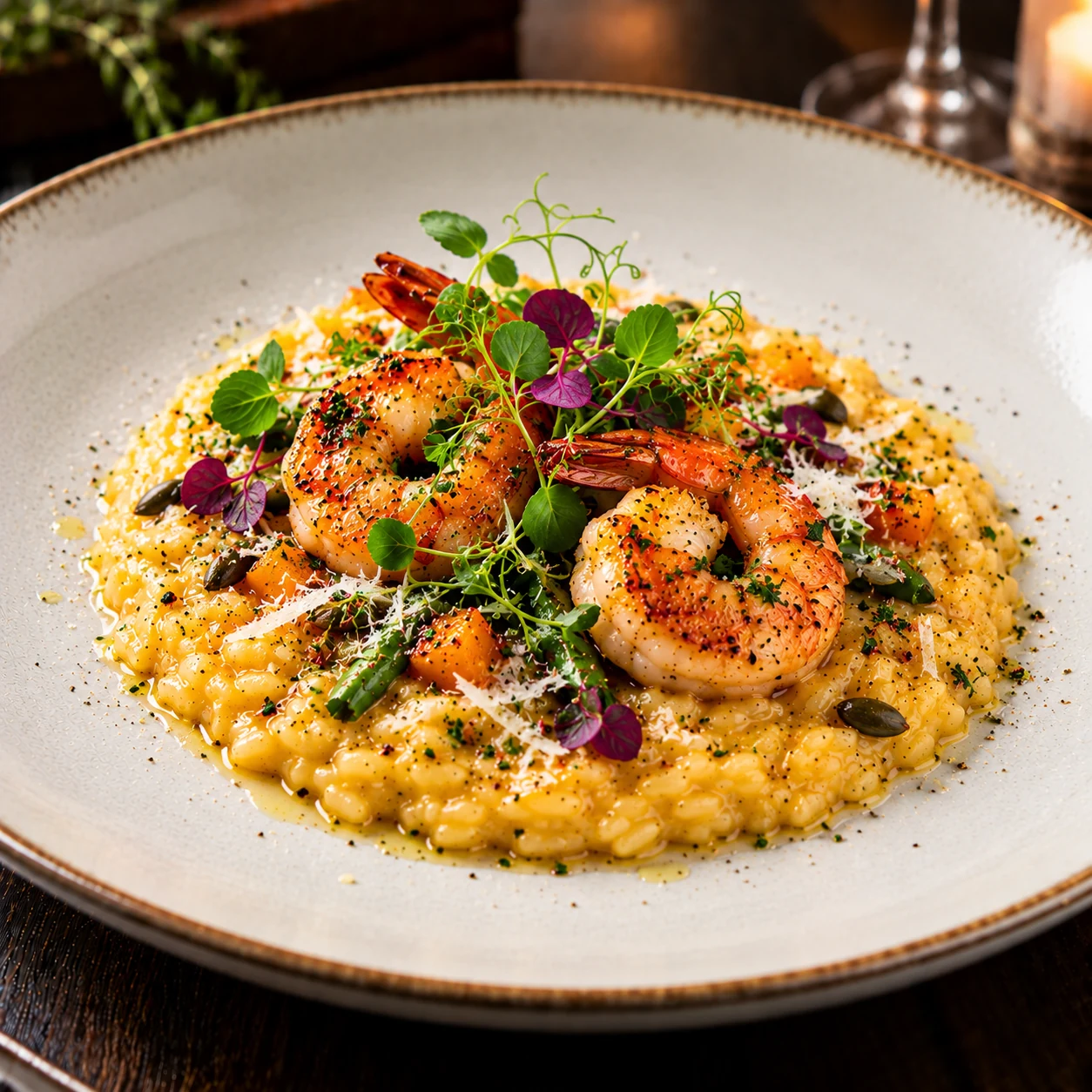
Finish the risotto just before serving and check its consistency. Spoon it into a warm, wide shallow bowl. Move the plate gently to form a low bed. Do not compress flowing risotto into a firm ring.
Plate the risotto first. Arrange shrimp in a short arc with their browned side visible. Keep the rice visible too. Add sauce only when it belongs to the dish and will not thin the risotto.
Spread the risotto into a low bed. Offset the fish fillet on top, skin-side up when crisp. Avoid stacking heavy vegetables on the fish. A broad plate is easier to eat than a narrow bowl.
Reserve a few pieces already used in the risotto for the surface. Plate the rice first, then distribute those pieces deliberately. Avoid adding unrelated vegetables solely for decoration.
A low risotto bed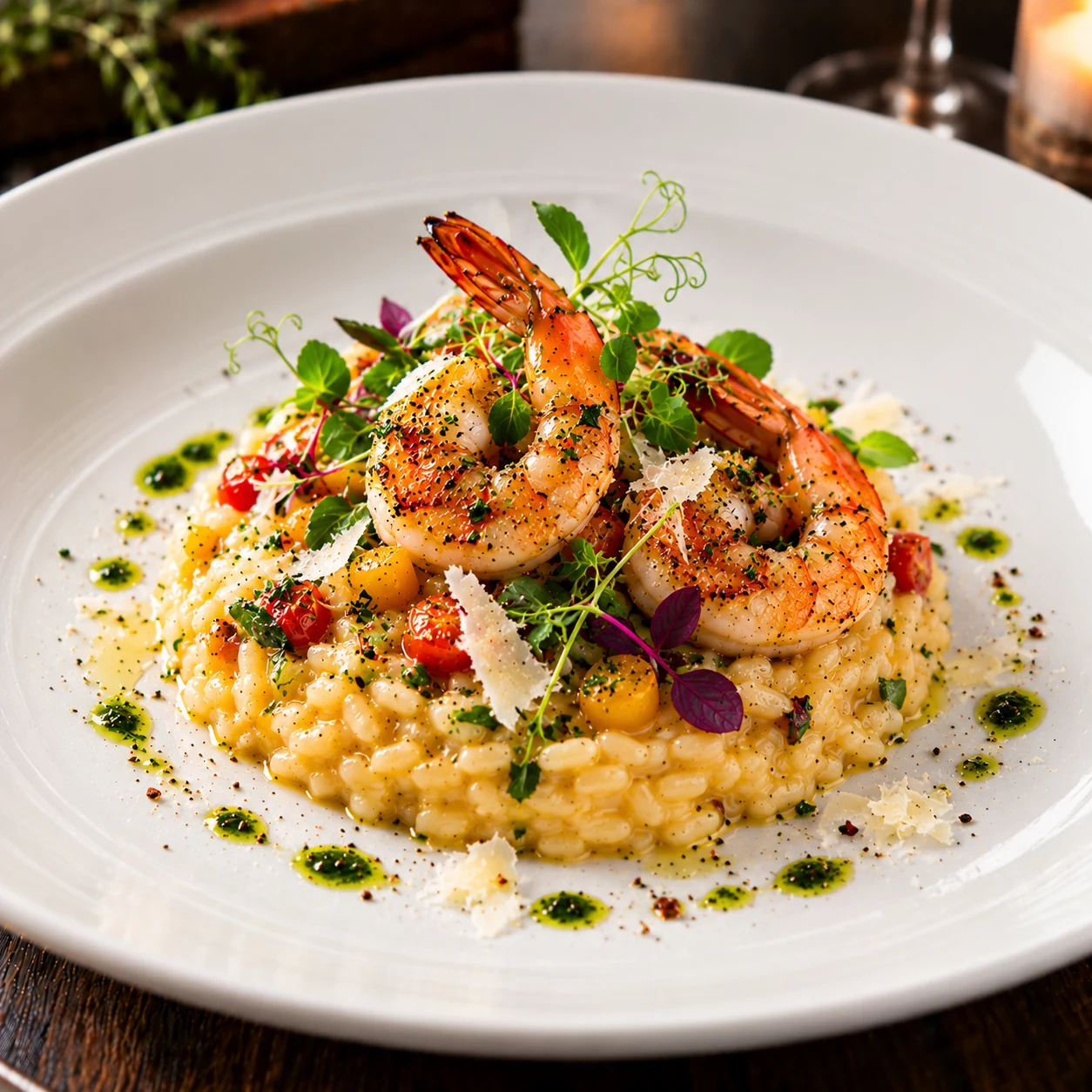 With shrimp
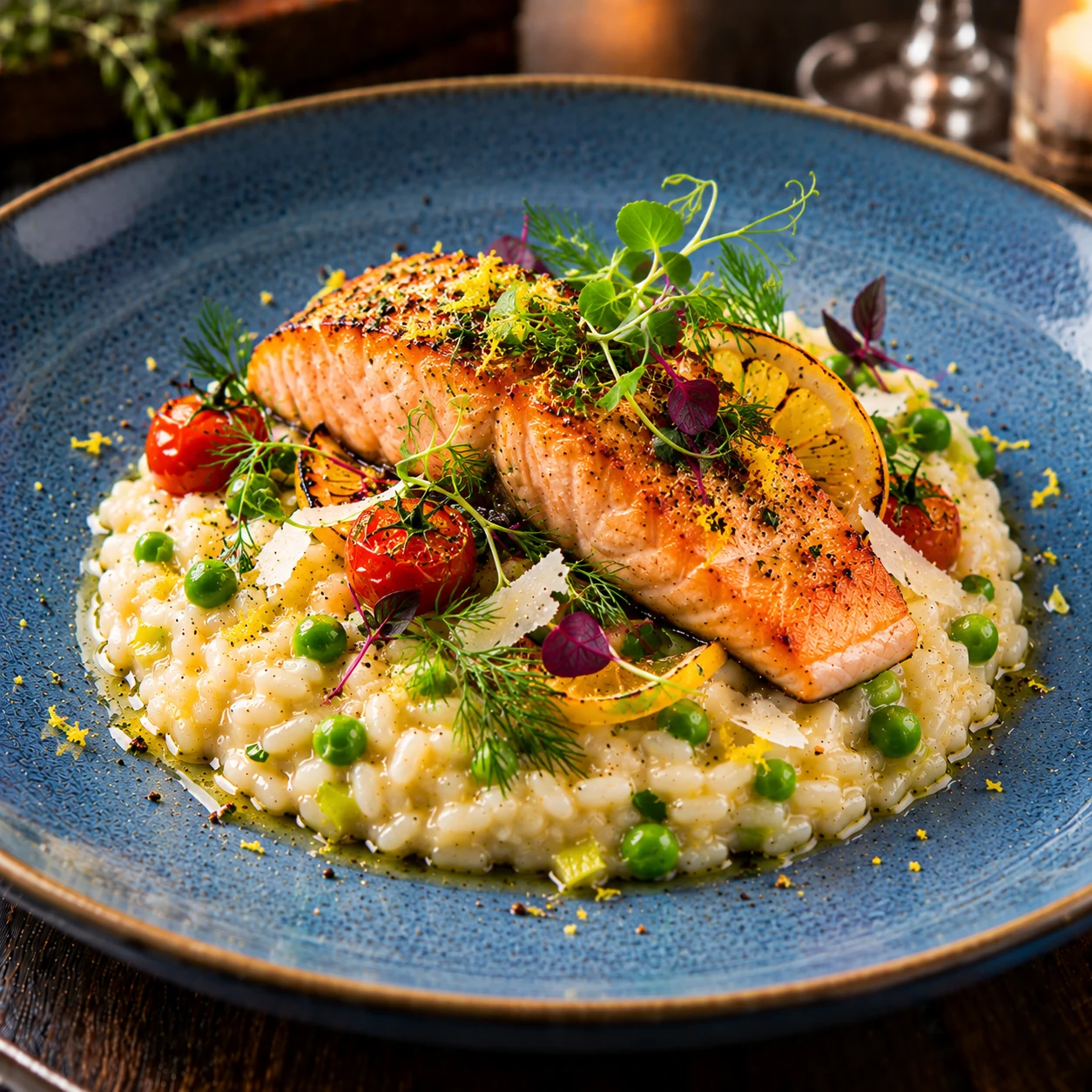 With salmon or other fish
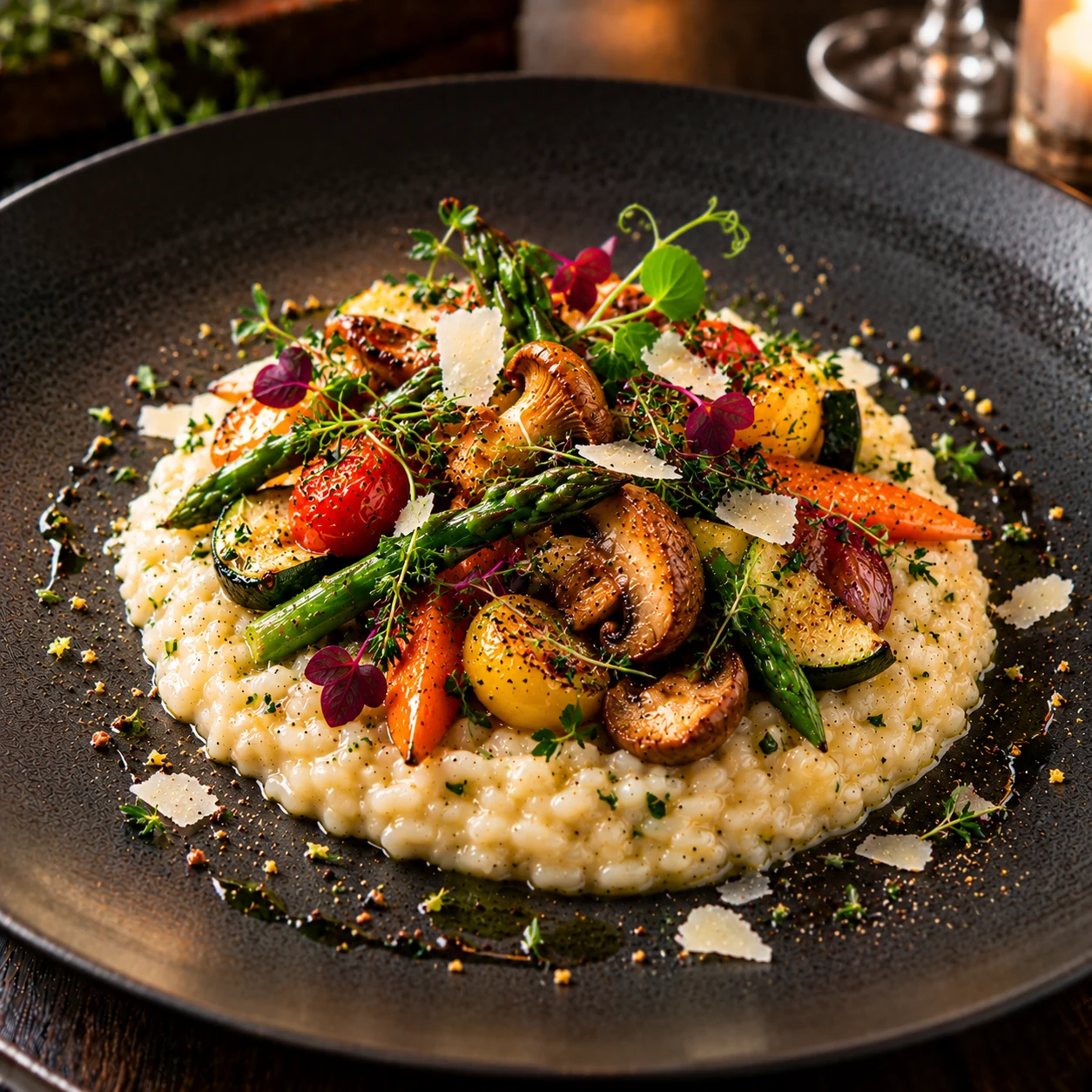 With vegetables or mushrooms
AI-generated plating inspiration
The rice should spread gently rather than stand like a firm cake.
A wide shallow bowl provides space and safely contains the creamy rice.
Shrimp, fish or vegetables should sit stably and remain easy to reach.
Risotto thickens as it stands. Have guests ready before plating.
A ring is usually unsuitable for classic creamy risotto. A low bed suits its consistency better.
Check consistency before plating and serve immediately. Do not dry the rice deliberately to force a shape.
Either works. On a low bed they form a compact composition; beside it the elements stay more separate.
Describe your main ingredient, sides and sauce. PlatingStudio creates three personalised plating ideas with step-by-step guidance.