
A compact oval
Place a generous spoonful slightly off-centre. Smooth it into a low oval with the back of the spoon. Set meat or fish alongside it. This shape works with softer mash and is more reliable for a normal portion than a tall tower.
Plate mashed potatoes as an oval, quenelle, spoon swipe or low base. Learn practical spoon techniques and choose a suitable consistency.
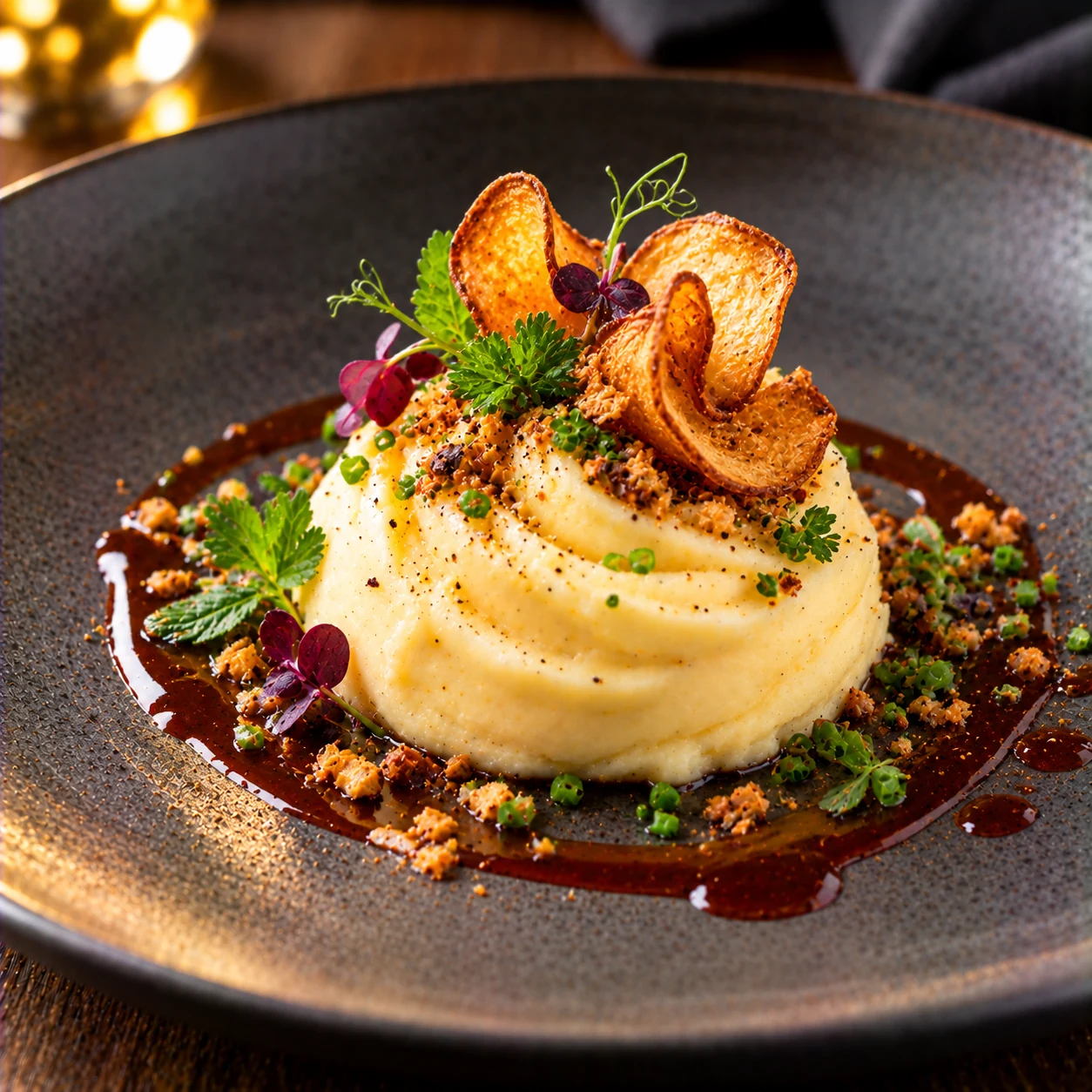
Place a generous spoonful slightly off-centre. Smooth it into a low oval with the back of the spoon. Set meat or fish alongside it. This shape works with softer mash and is more reliable for a normal portion than a tall tower.
Use two warm spoons. Scoop the purée with one and gently turn it between them into an elongated shape. Set it down from the spoon tip. The purée must hold its shape; choose an oval for very soft creams.
Place a small portion on the plate. Press the back of the spoon into it and pull away in one short motion. Repeated strokes create ragged edges. A thin swipe alone may not provide enough food, so keep the serving appropriate to the dish.
Make a broad, low base and rest only part of the main ingredient on it. Keep it low enough to support the weight. Add sauce beside it so the base does not spread. Tall stacks of mash are harder to eat.
A compact oval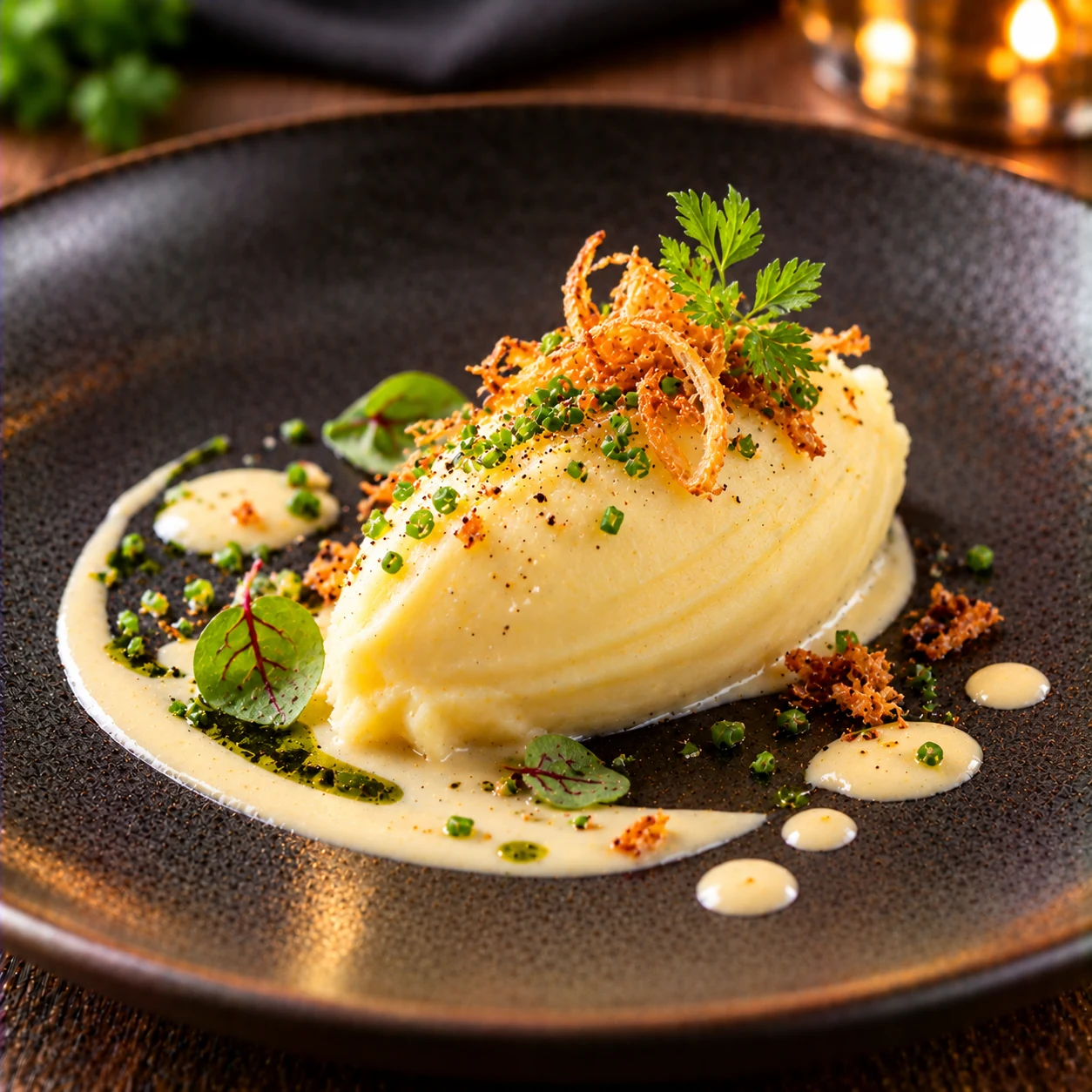 A quenelle
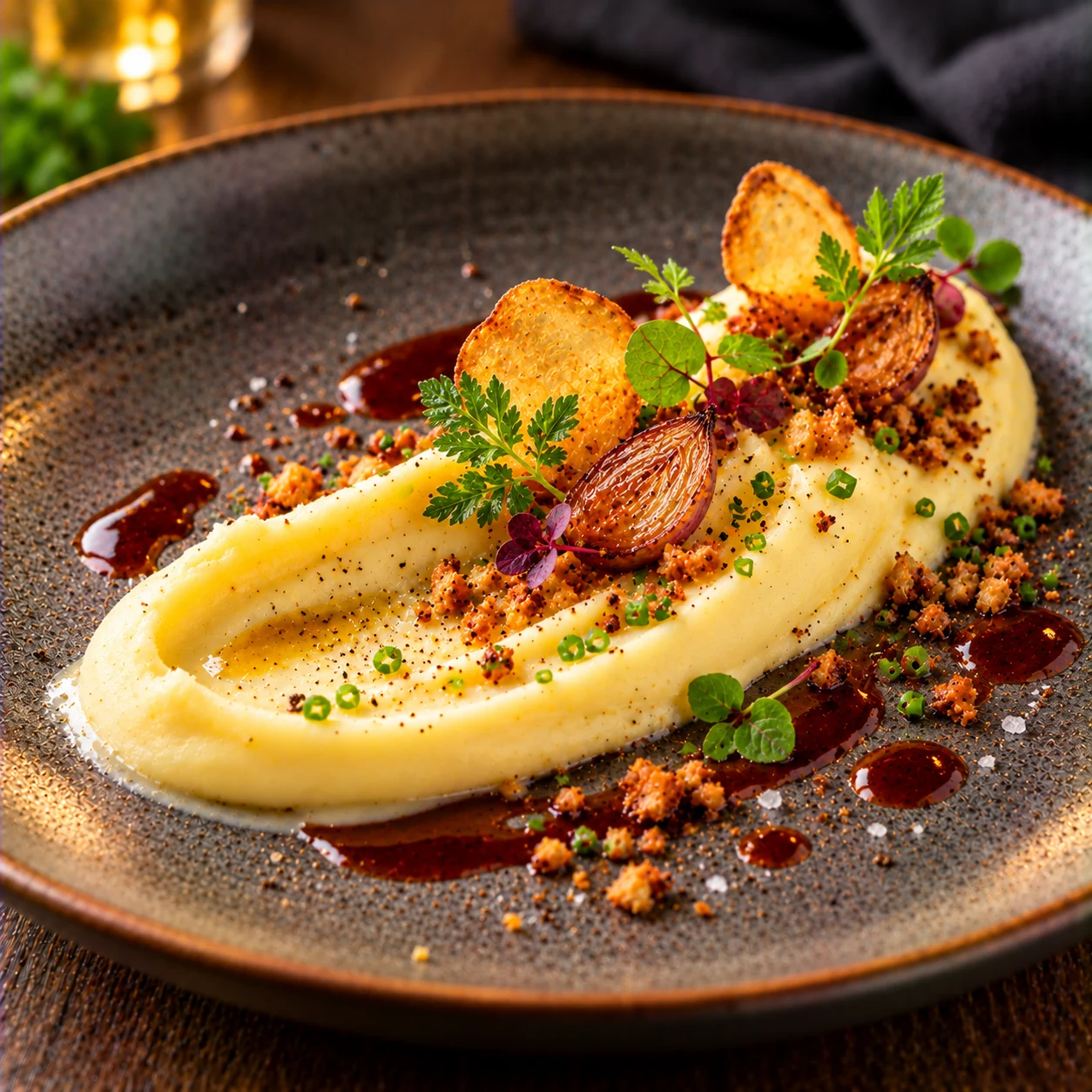 A spoon swipe
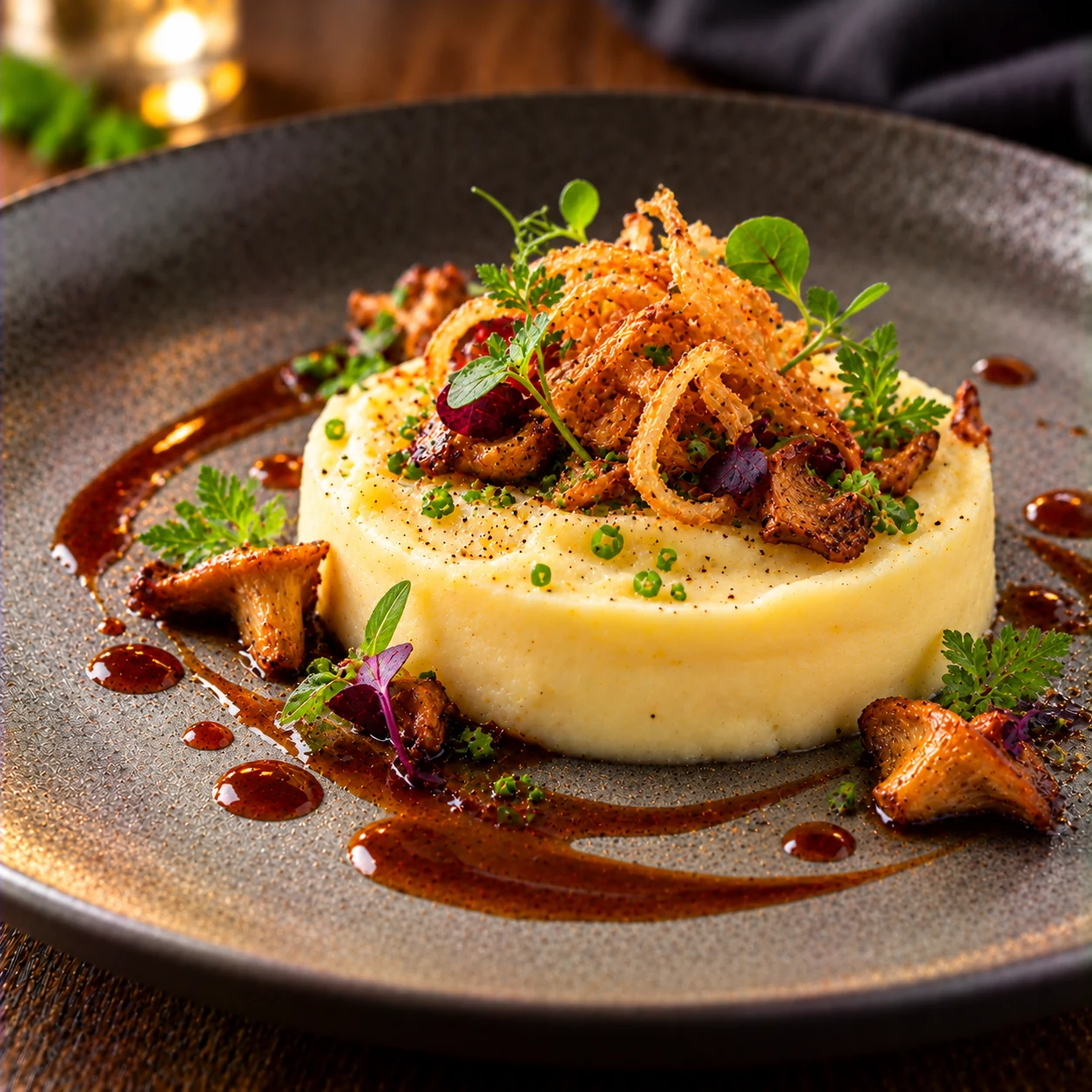 A low base
AI-generated plating inspiration
Soft purée needs a low shape; firmer purée can form a quenelle.
Stir the purée just before plating. A dried surface prevents clean shapes.
A spooned oval often works better than a ring that cannot contain soft purée.
The side should remain a proper serving, not just a thin decorative streak.
The purée may be too soft or diluted by sauce. Choose a lower shape rather than making it excessively thick for appearance.
Yes for firm purée. For softer purée, make a low spooned base instead.
Beside or beneath one edge of the main ingredient, without flooding the entire purée.
Describe your main ingredient, sides and sauce. PlatingStudio creates three personalised plating ideas with step-by-step guidance.