
 PLATING GUIDE · 8 CORE RULES
FOOD PLATING · FUNDAMENTALS
How to plate food.
With intention, not guesswork.
Beautiful food plating is not about adding more decoration. Focus, spacing, height, visual direction and a finish that suits the dish matter far more. These eight principles help you create cleaner, more restaurant-style plates.
PLATING GUIDE · 8 CORE RULES
PLATE ANATOMY
Four zones shape the impact.
A strong plate is not a coordinate system. Still, it helps to separate four jobs: focal point, negative space, height and connection. They do not need symmetry – they need intention.
Focal point
Decide what the hero of the plate is. Give that element the strongest position, clearest contrast and enough space to lead the composition.
Negative space
A plate does not need to be full. Empty space creates calm, separates groups and makes important ingredients feel more deliberate.
Height
Different heights create depth. Keep the structure stable, edible and believable rather than stacking simply for effect.
Connection
Sauce can connect elements, create direction or form a base. Keep it controlled and avoid hiding the contours of the main ingredient.
RESTAURANT-STYLE PLATING
8 food plating rules that improve almost any plate.
These principles work for meat, fish, pasta, vegetables and desserts. You do not need to force every rule onto every dish – the goal is a composition that feels intentional.
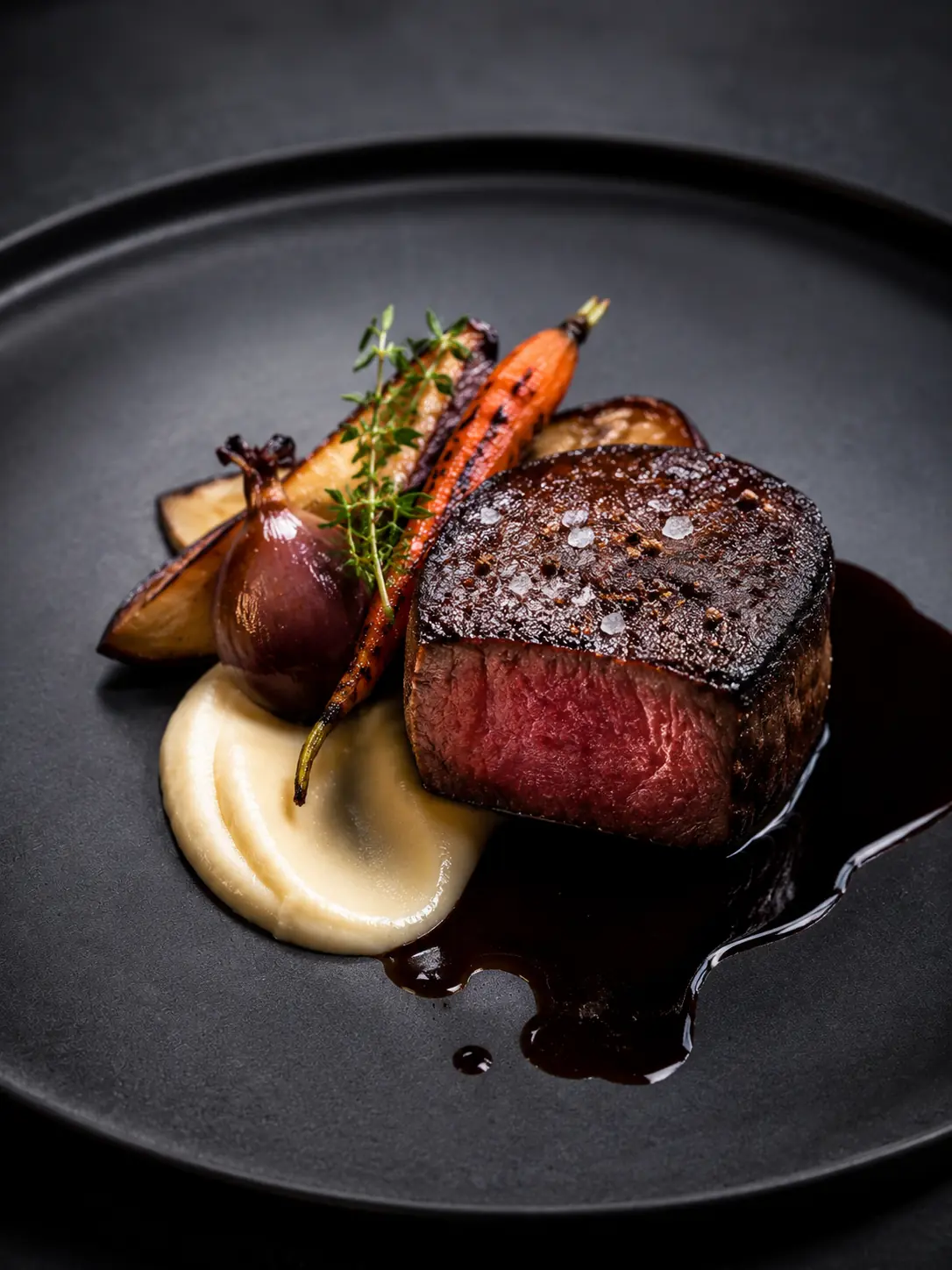
Create one focal point
Decide what the hero of the plate is. Give that element the strongest position, clearest contrast and enough space to lead the composition.
Use negative space
A plate does not need to be full. Empty space creates calm, separates groups and makes important ingredients feel more deliberate.
Build height with purpose
Different heights create depth. Keep the structure stable, edible and believable rather than stacking simply for effect.
Group components
Sides usually look stronger in deliberate groups than when scattered evenly. Proximity and slight overlap help separate elements read as one composition.
Guide with sauce
Sauce can connect elements, create direction or form a base. Keep it controlled and avoid hiding the contours of the main ingredient.
Use colour contrast
One bright, green or vivid accent can guide the eye. Colour should come from edible components that genuinely belong to the dish.
Make texture visible
Crisp, creamy, juicy or airy: arrange contrasting textures so guests can anticipate them before the first bite.
Know when to stop
Clean the rim and add only a few precise finishing touches. Extra garnish rarely improves a plate that is already complete.
THE RULES IN PRACTICE
See how the principles shape a plate.
Focus, negative space, contrast and structure look different for every dish. The goal is not a rigid formula, but a composition that feels intentional.
 Create one focal point
 Use negative space
 Use colour contrast
 Make texture visible
FROM PRINCIPLE TO PLATE
A simple order for plating your dish.
Beautiful food plating is not about adding more decoration. Focus, spacing, height, visual direction and a finish that suits the dish matter far more. These eight principles help you create cleaner, more restaurant-style plates.
Choose the hero
First decide which component should attract the eye.
Place the large elements
Set the main ingredient and sides before adding sauce or small details.
Check spacing and height
Step back briefly. Look at negative space, direction and whether the groups feel connected.
Add sauce and finish
Add sauce and final accents last, clean the rim and serve.
A CONCRETE EXAMPLE
See how the same principles work for different dishes.
Beef fillet, salmon and pasta show how focus, sauce, sides and negative space change with each dish.
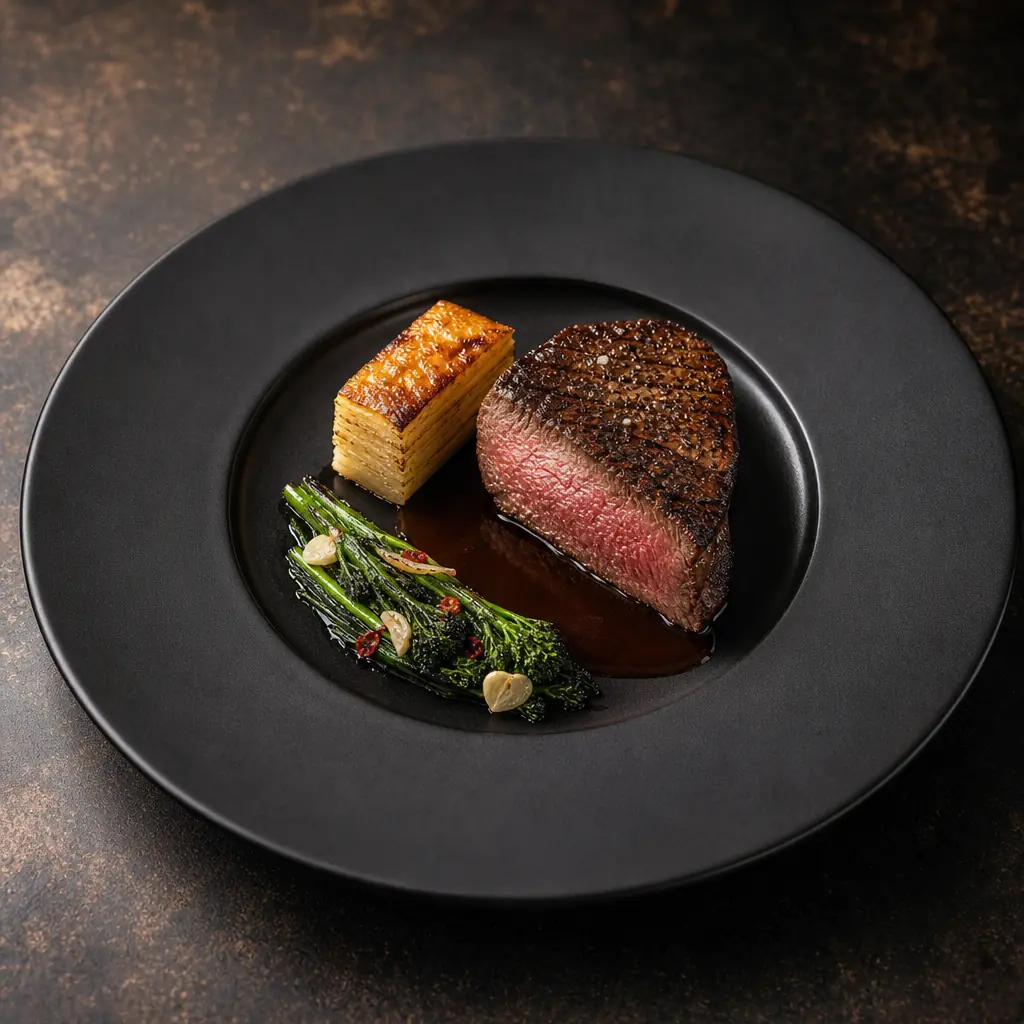 Plate beef fillet →
 Plate pasta →
AD · AMAZON AFFILIATE LINKS
The right tools for the finishing touch
Selected tools for plating this dish.
Plating tweezersPlace herbs, flowers and delicate details precisely.Squeeze bottleCreate dots and fine lines with sauces or coulis.Sauce spoonAdd sauces neatly and with control.
As an Amazon Associate I earn from qualifying purchases.
The rules are universal. Your dish is individual.
PlatingStudio applies these principles to your actual ingredients, plate and dish. You get three different plating concepts plus step-by-step guidance to recreate them.