
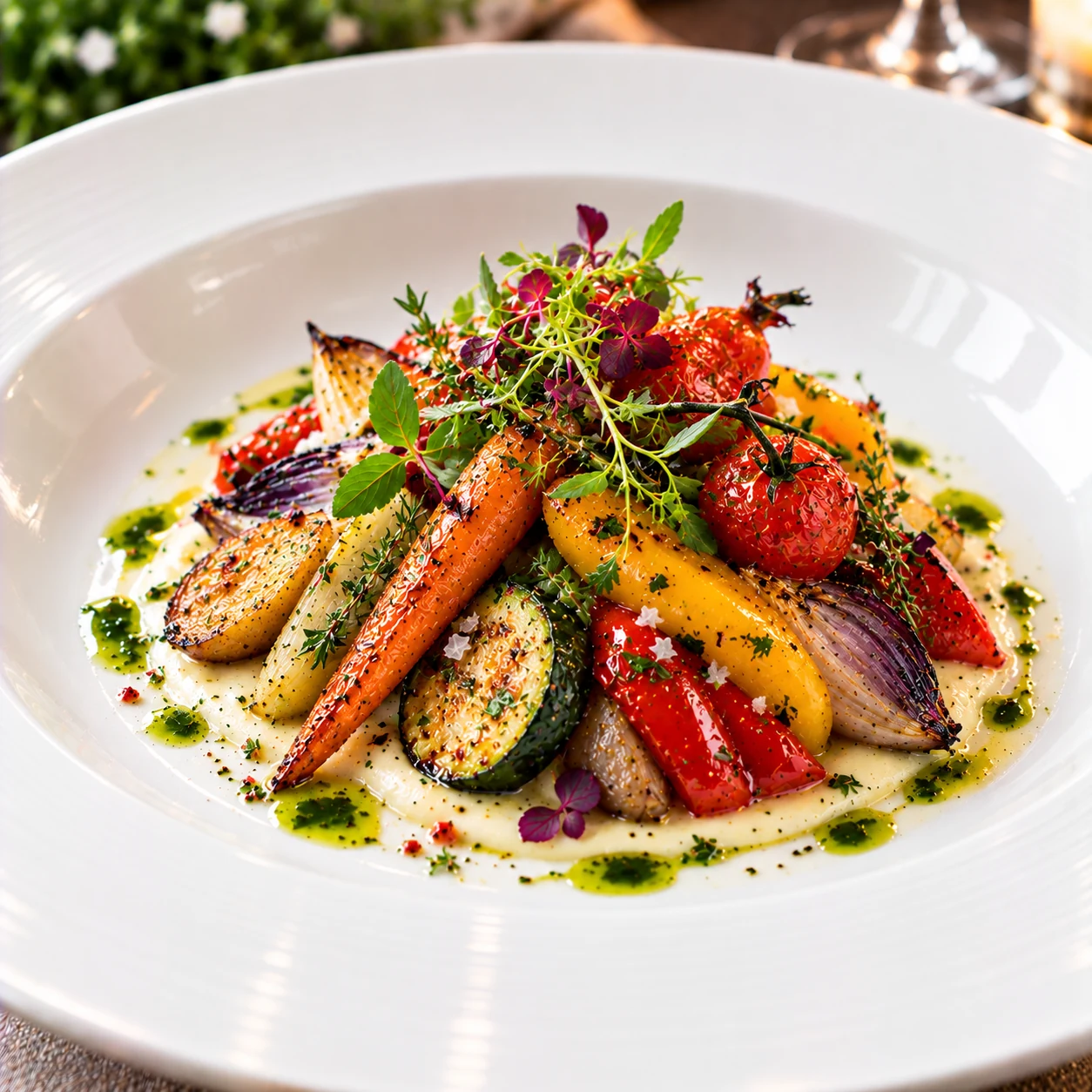
01
Roasted vegetables
Group similarly sized pieces. Turn some cut faces upwards to show roasting colour. Add oil sparingly; a pool beneath the vegetables makes the composition less controlled.
Organise colour. Repeat shapes. Show texture.
Vegetables naturally provide colour and varied forms. Strong plates organise that variety instead of mixing everything everywhere.

Group similarly sized pieces. Turn some cut faces upwards to show roasting colour. Add oil sparingly; a pool beneath the vegetables makes the composition less controlled.
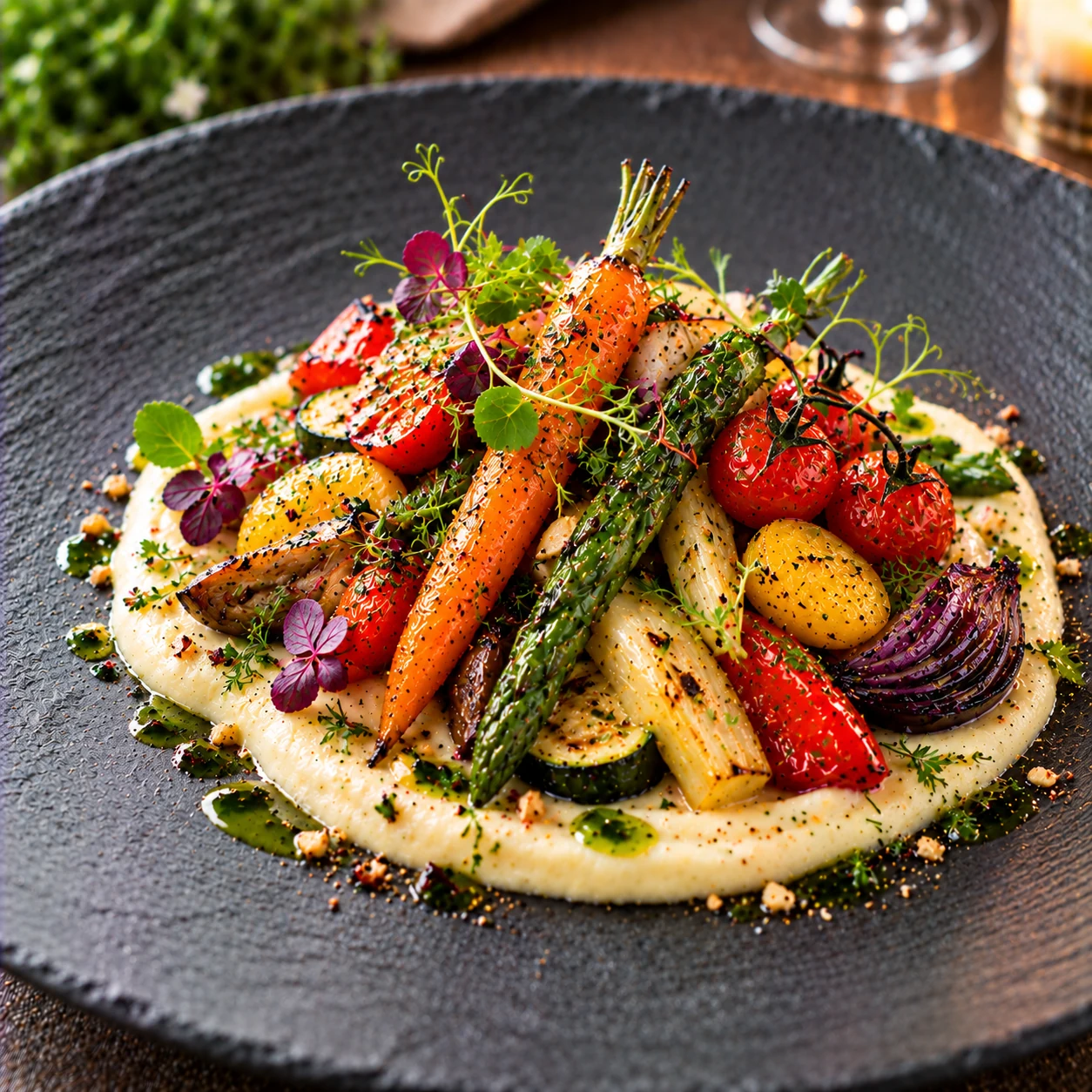
Spoon a low cream base and set vegetables partly on it. Put taller pieces behind smaller ones. The base must support them; thin sauce does not form a stable pedestal.
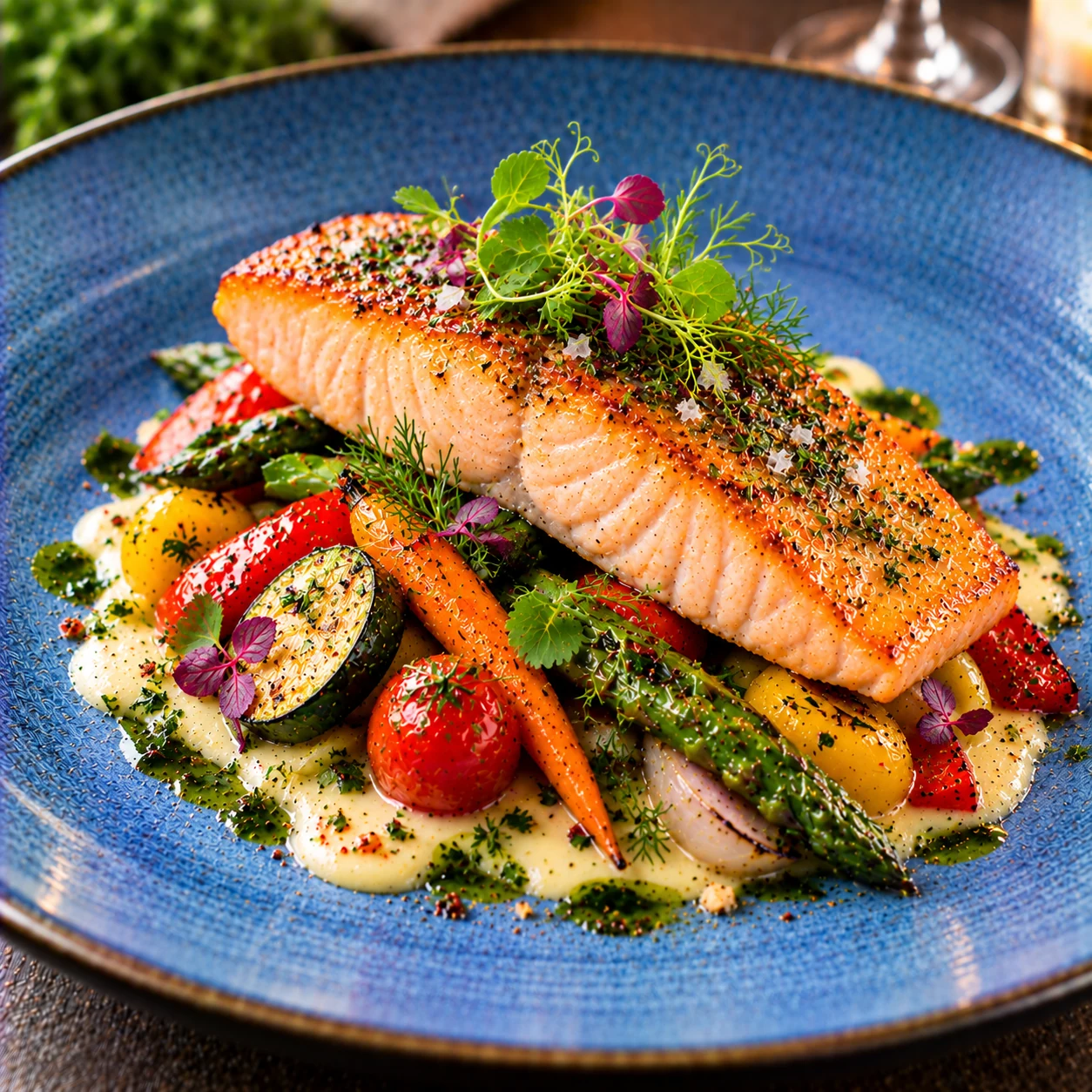
Make one connected vegetable group rather than circling the rim. Place the main ingredient beside it. Drain the vegetables so their water does not dilute sauce or spread purée.
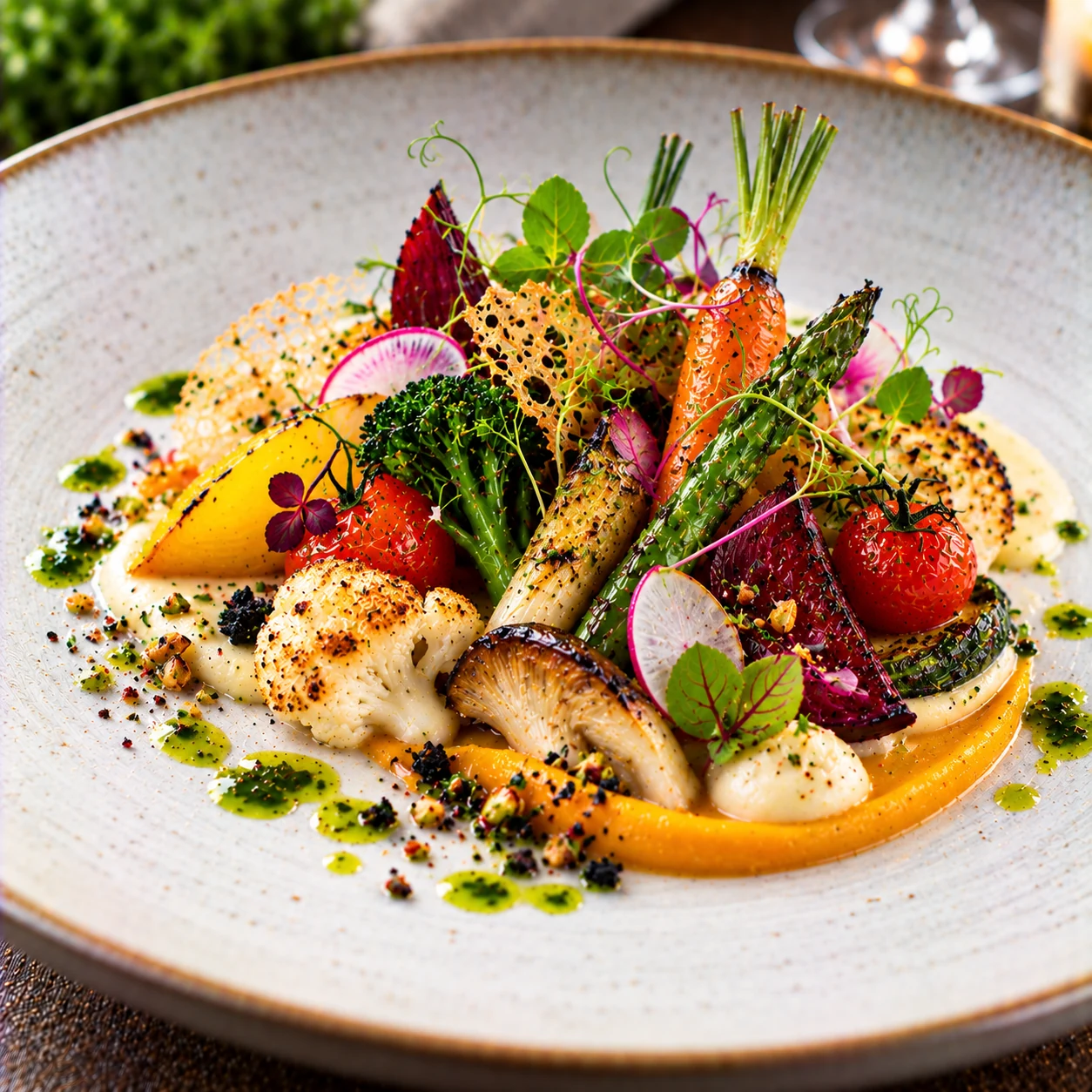
Keep soft, roasted and crisp elements distinguishable. Plate the warm base first, then add delicate pieces. Add crunch last to a relatively dry area. Use only textures that belong to the dish.
Two or three colour areas usually feel stronger than many small colour spots across the plate.
Use slices, batons, florets or small whole vegetables with deliberate repetition and direction.
Show roasted edges, creamy purées and crisp elements so their differences are obvious.
Lean or lightly stack a few elements while respecting the natural form of the vegetables.
Use fewer varieties per group, repeat shapes and preserve open space.
Choose one element as the focal point and support it with sauce, texture and a substantial component.
Selected tools for plating this dish.
As an Amazon Associate I earn from qualifying purchases.
Describe your main ingredient, sides and sauce. PlatingStudio creates three personalised plating ideas with step-by-step guidance.