
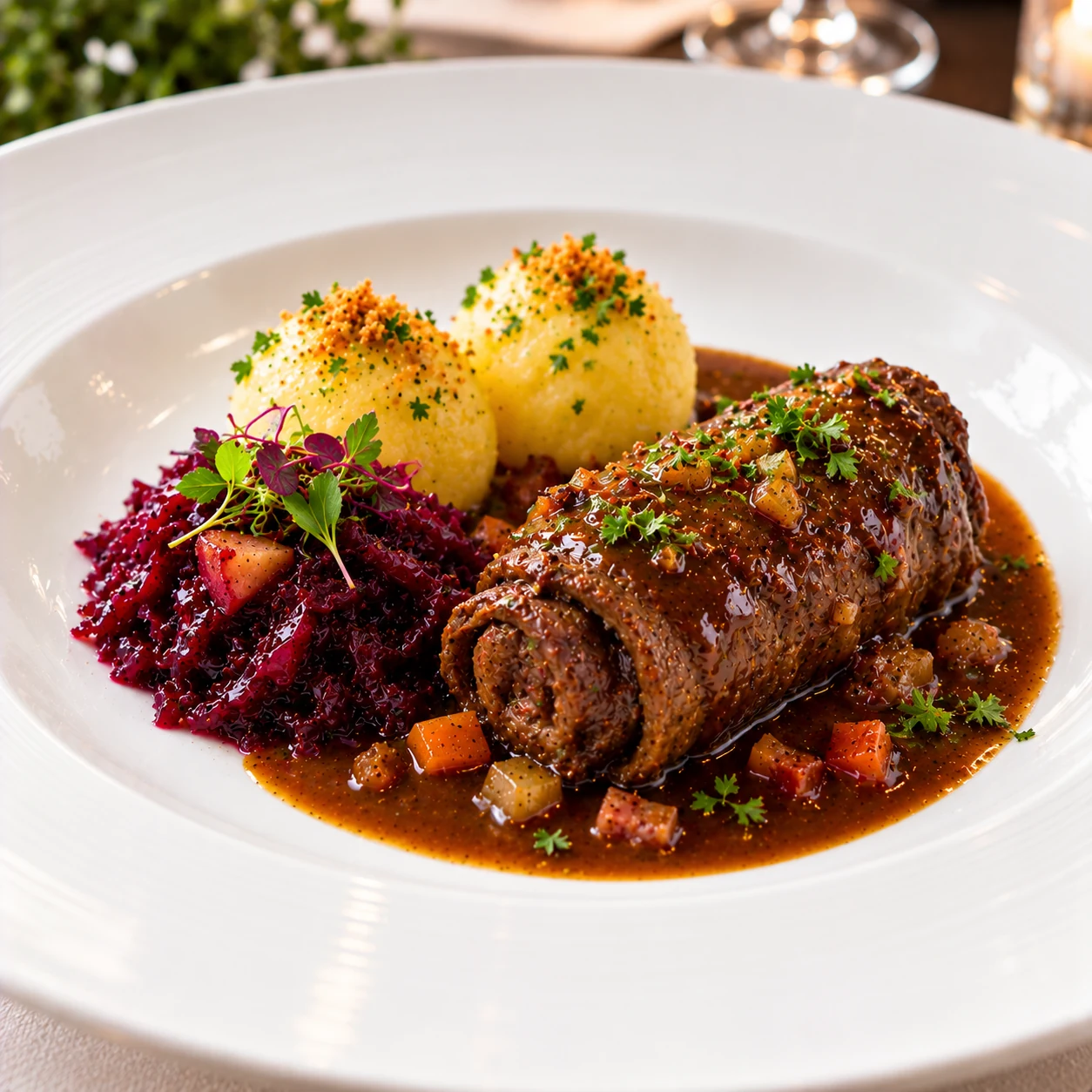
01
Whole roulade
Place the roulade at a slight diagonal. Group potatoes or dumplings beside it and add gravy along one long edge. Keep the top visible. Remove all string, pins or skewers before plating.
Use the shape. Guide the gravy. Group the sides.
The long shape of a beef roulade already creates direction. Build the gravy and sides around that line instead of placing everything side by side.

Place the roulade at a slight diagonal. Group potatoes or dumplings beside it and add gravy along one long edge. Keep the top visible. Remove all string, pins or skewers before plating.
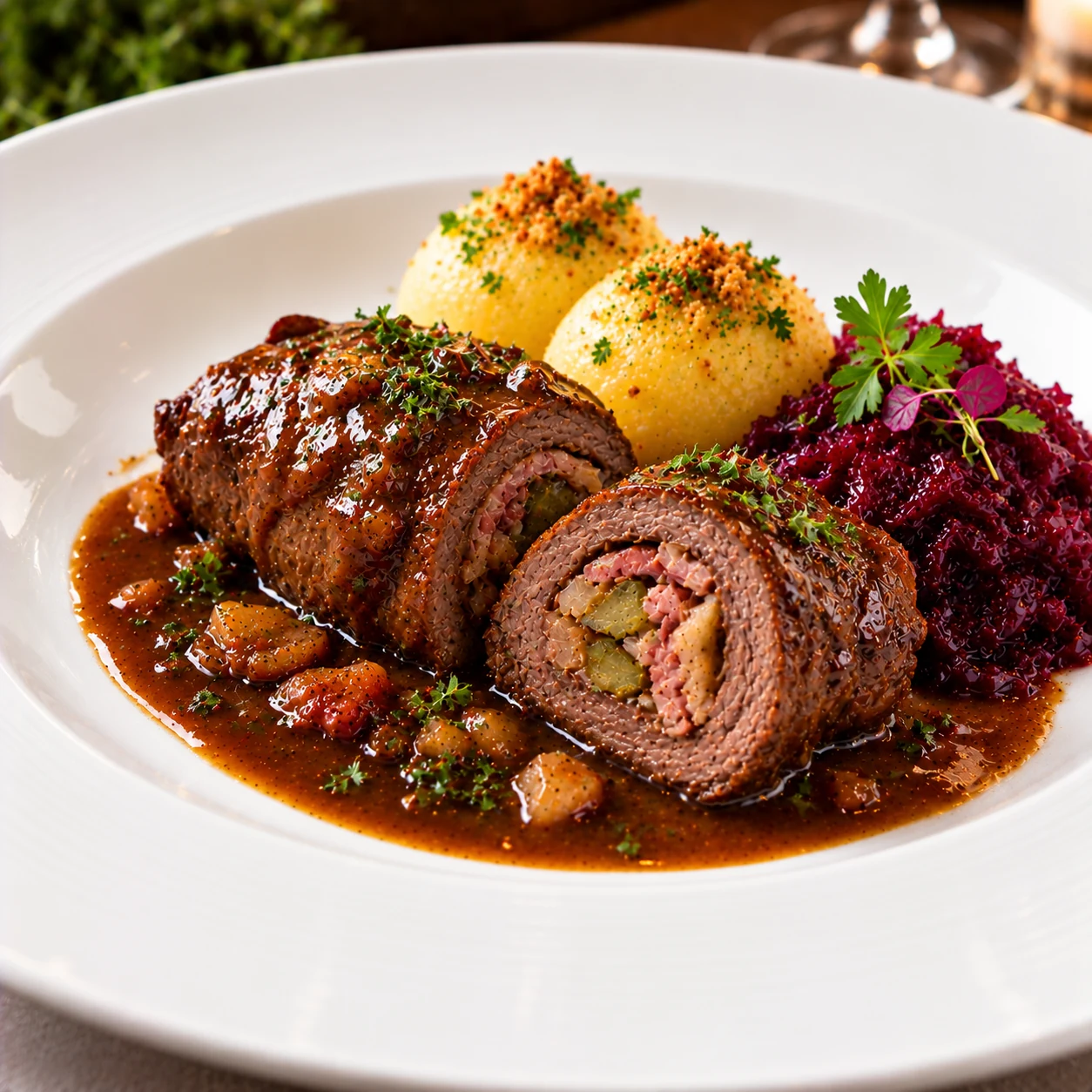
Cut one end neatly at an angle. Turn the cut towards the guest and place the cut piece close beside the roulade. Keep the remaining piece stable. Add gravy below the meat rather than over the filling.
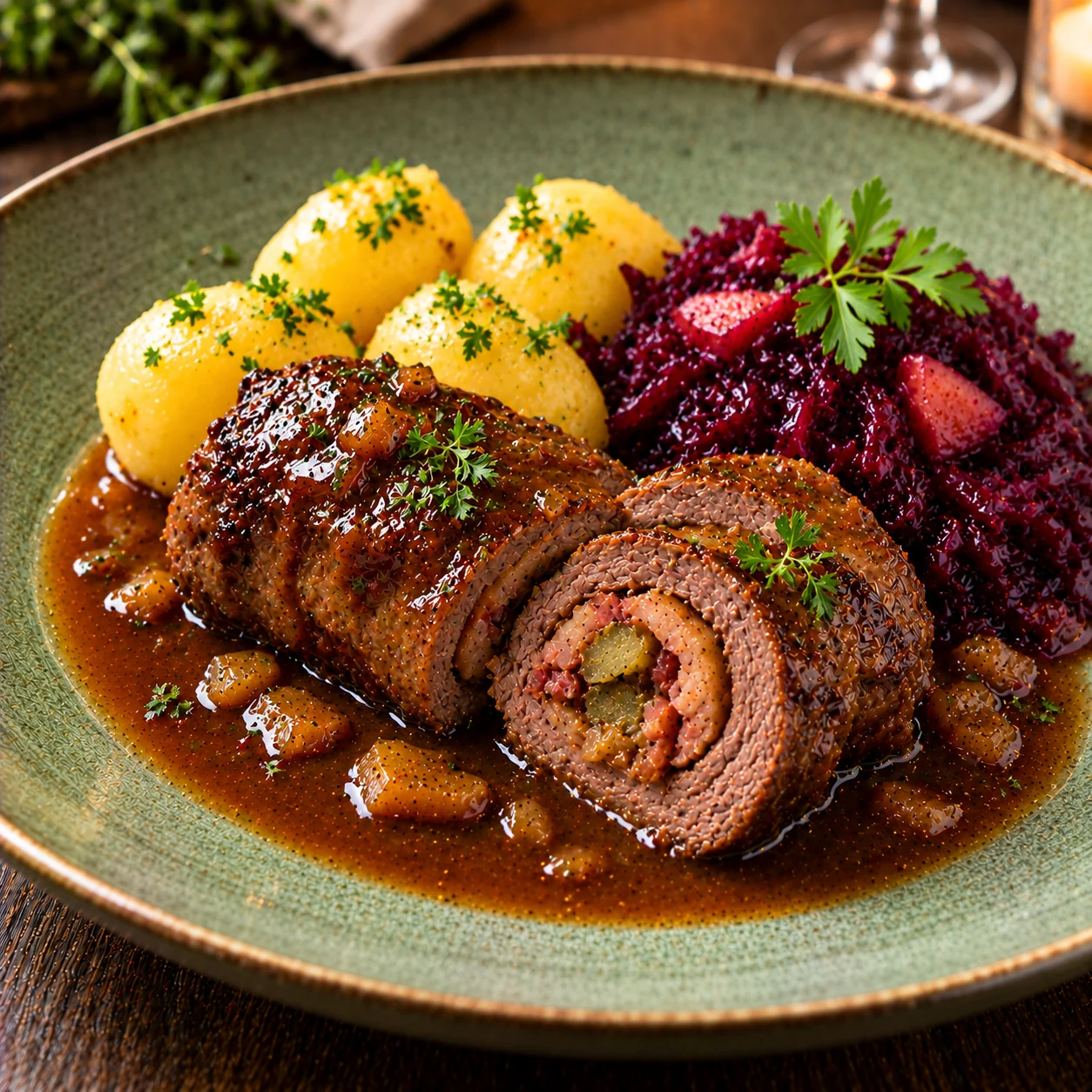
Group the potatoes and shape cabbage beside them with two spoons. Let the roulade provide the main direction. Add gravy near the meat last to keep cabbage liquid from spreading into it.
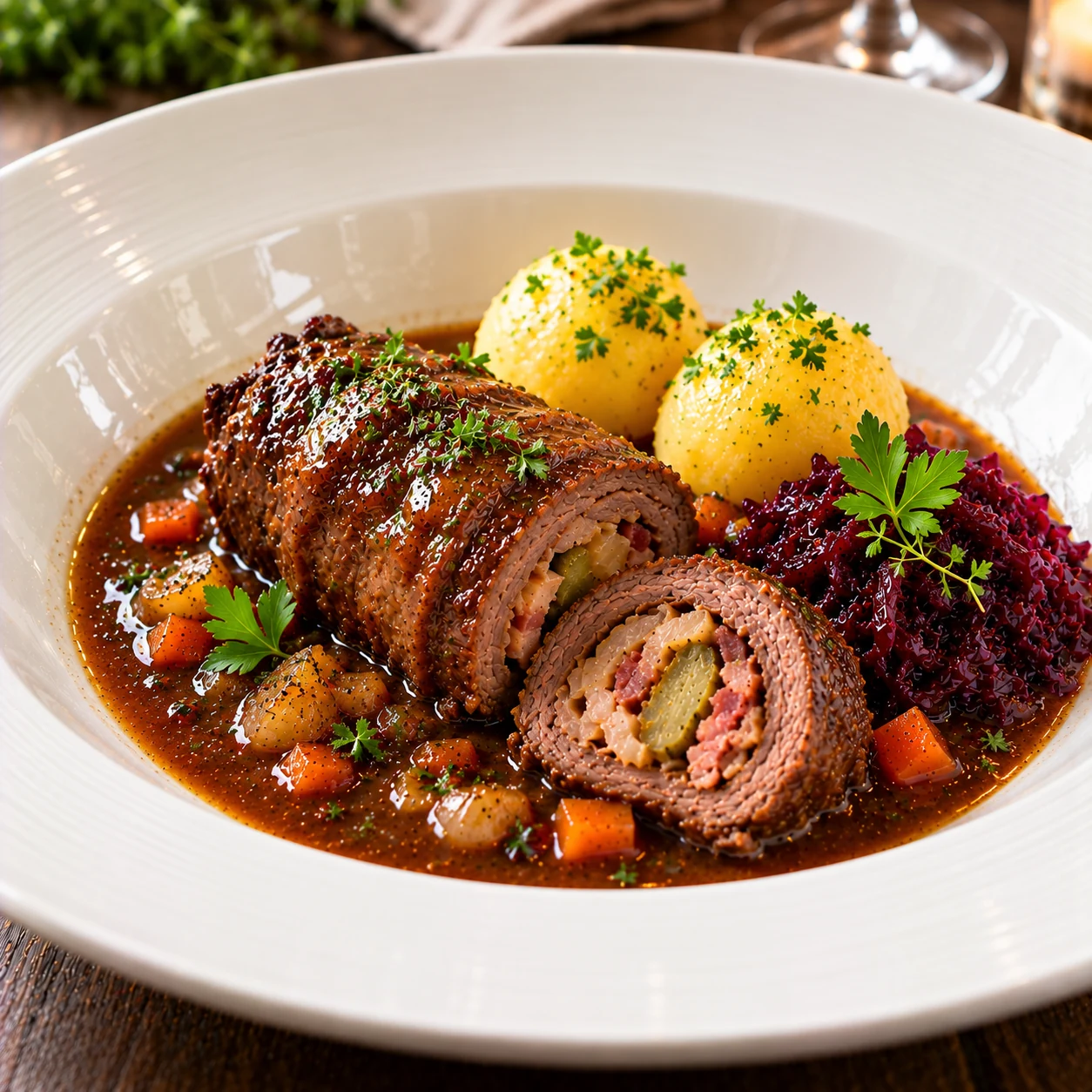
Use a shallow bowl for generous gravy. Offset the roulade slightly and place the side alongside it. Keep it easy to cut rather than stacking other components on top.
Whole or cut on an angle, the roulade can set the visual direction of the plate.
A clean cut reveals texture and filling and makes the classic dish more visually interesting.
Keep dumplings, potatoes or vegetables in deliberate groups rather than circling the meat.
Guide gravy beneath or along the roulade while leaving part of the surface visible.
It can work very well if the filling holds neatly. A whole roulade is equally valid for a classic presentation.
Enough for the dish, but controlled so the meat and sides keep their outlines.
Selected tools for plating this dish.
As an Amazon Associate I earn from qualifying purchases.
Describe your main ingredient, sides and sauce. PlatingStudio creates three personalised plating ideas with step-by-step guidance.