
01
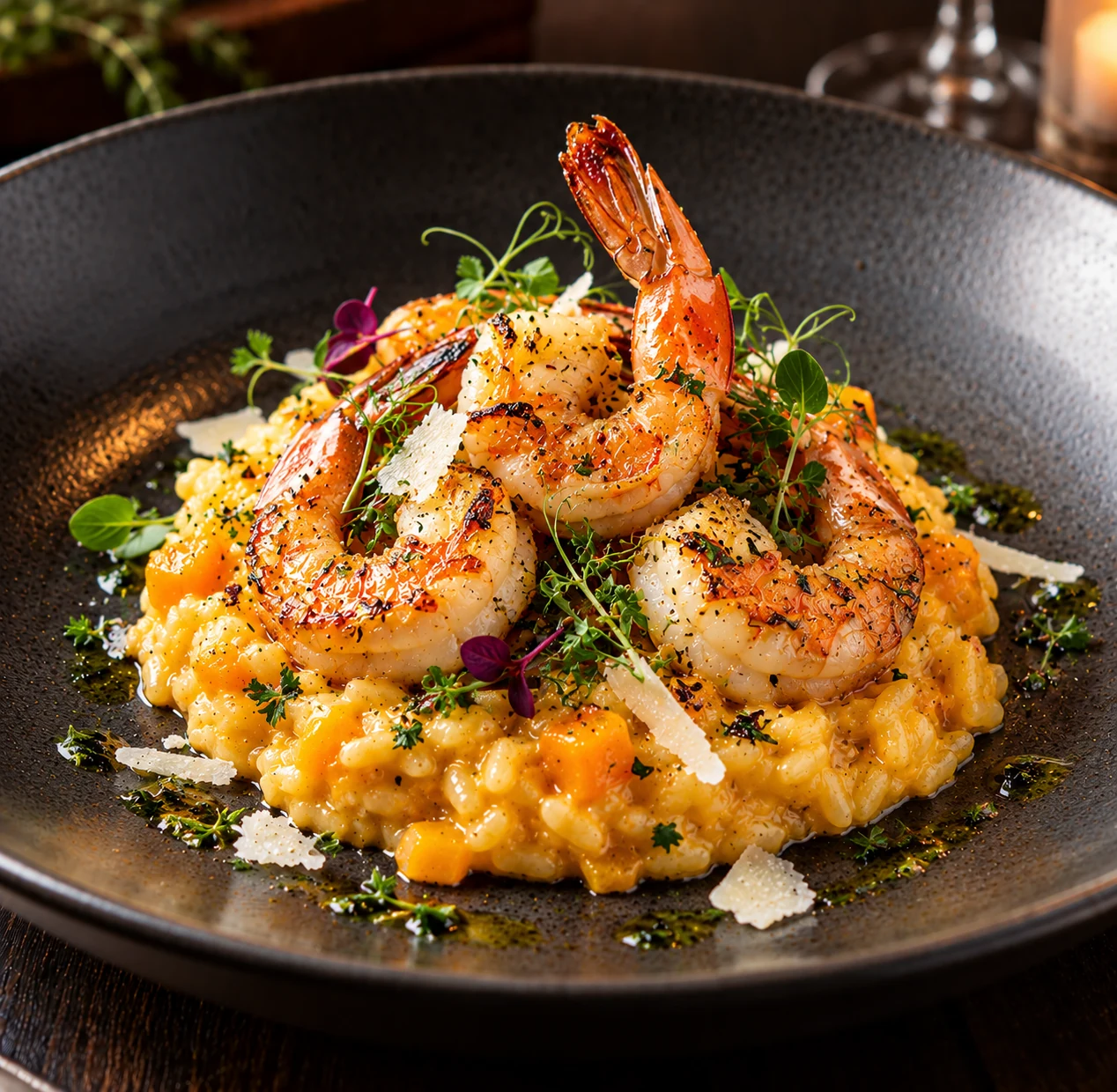
Shrimp with risotto
Spread risotto into a low bed in a wide shallow bowl. Arrange shrimp in a short arc rather than a tower. Keep their individual curves visible and use extra sauce sparingly.
Repeat the curve. Use colour. Keep it light.
Shrimp already bring a strong curved shape and warm colour. Repetition and deliberate spacing turn those qualities into an elegant composition.

Spread risotto into a low bed in a wide shallow bowl. Arrange shrimp in a short arc rather than a tower. Keep their individual curves visible and use extra sauce sparingly.
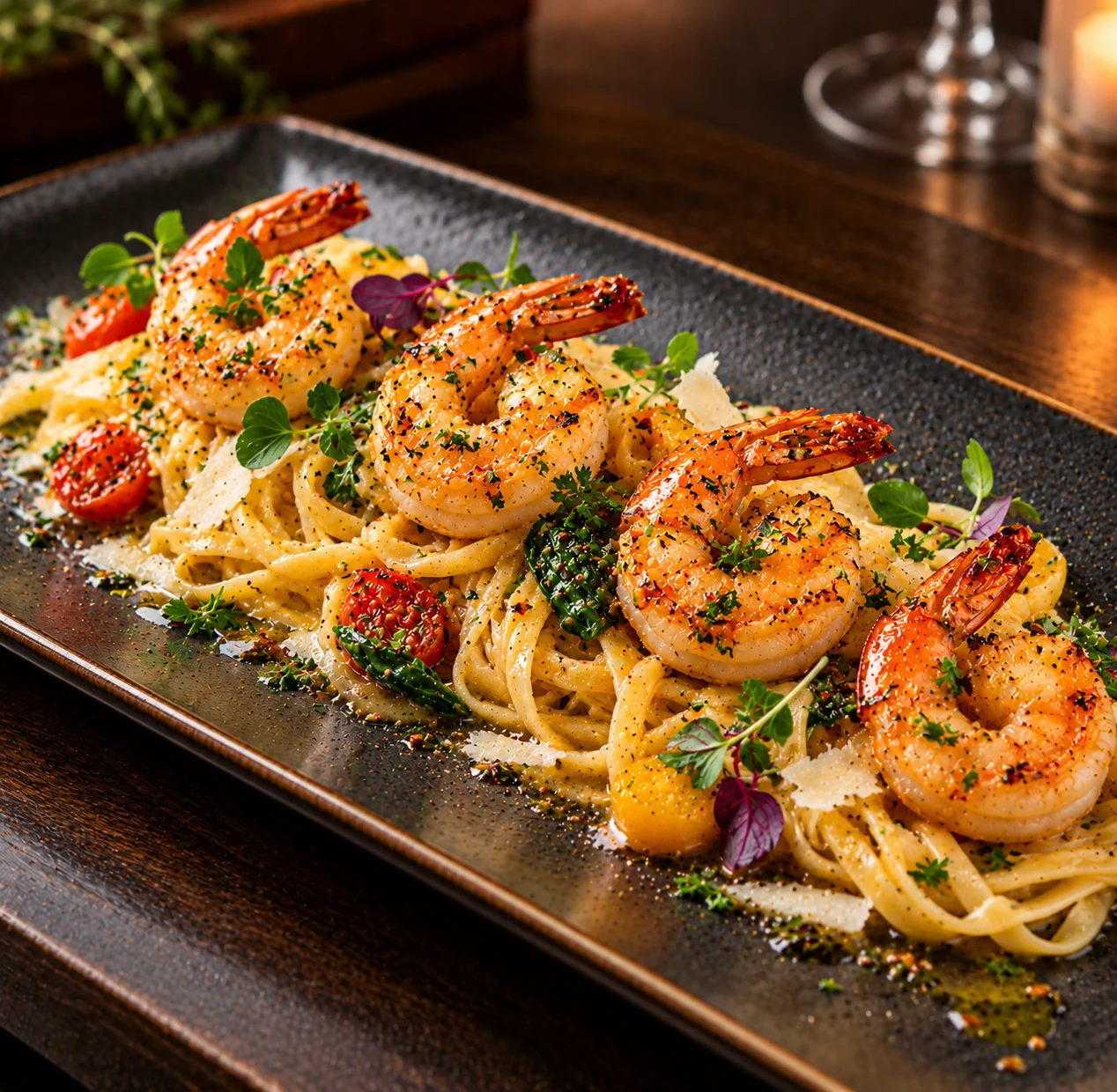
Form long pasta into a loose nest or short pasta into a compact portion. Place shrimp beside and partly on top. Sauce should coat the pasta without hiding the shrimp. Tuck stray strands back with tongs.
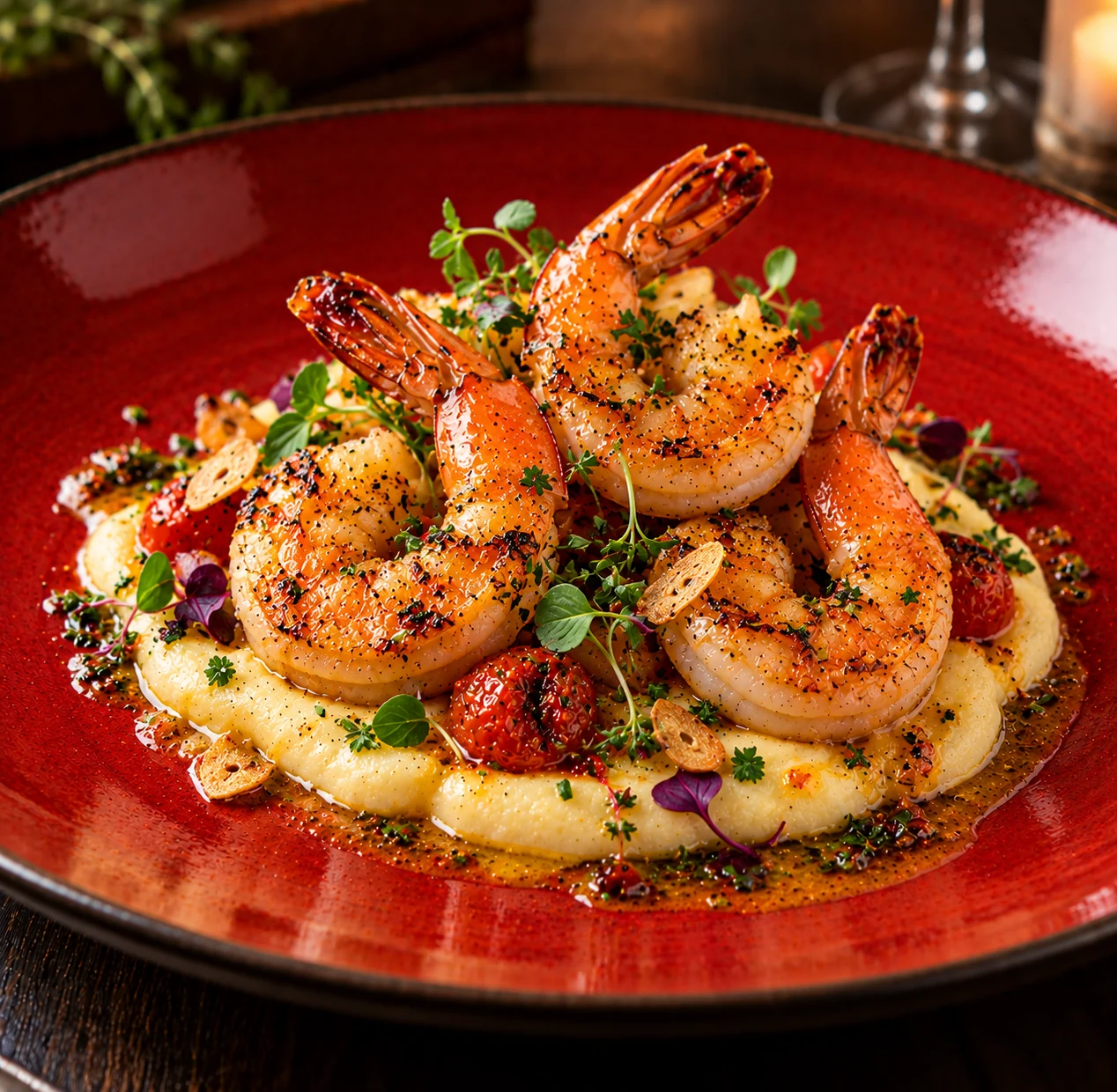
Spoon a small island of purée. Arrange shrimp slightly offset along its edge so their colour and curves remain visible. Add sauce alongside. Keep the base low enough to prevent slipping.
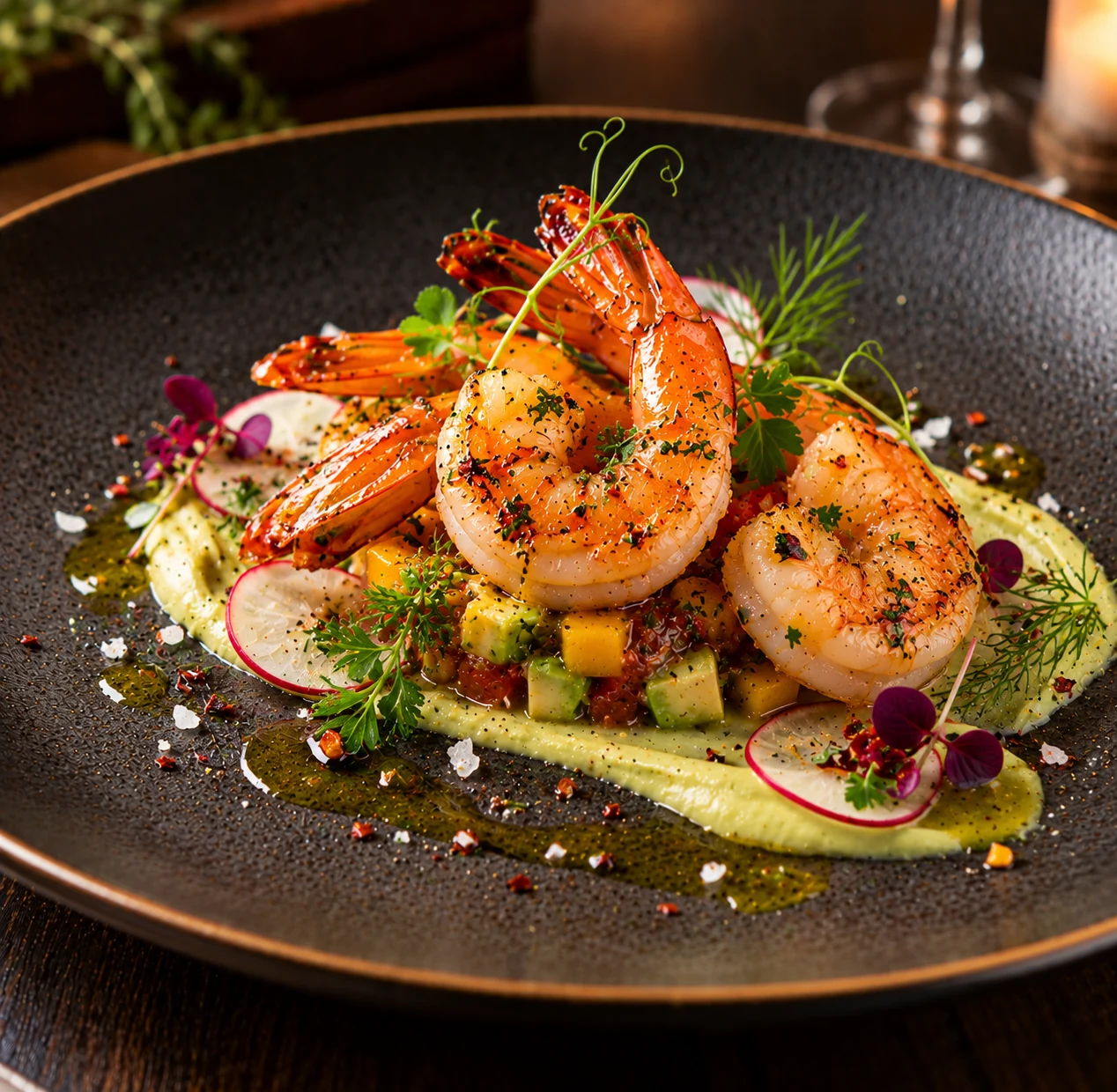
Use a smaller portion with room to eat. Peeled shrimp are practical in sauced dishes; leave tails only when guests can remove them comfortably. A small vegetable or cream element should support the shrimp rather than become a second main portion.
Align several shrimp for rhythm or oppose directions deliberately to create tension.
Keep individual shrimp recognisable. Slight overlaps are enough to connect the group.
Purée, cucumber, herbs or green vegetables make the warm shrimp colour stand out.
Dots, small pools or a thin base usually look cleaner than a large amount of sauce.
For starters, three to five larger shrimp often create a clear elegant composition; mains depend on portion size.
Place it diagonally or slightly off-centre and align the sides with that visual line.
Selected tools for plating this dish.
As an Amazon Associate I earn from qualifying purchases.
Describe your main ingredient, sides and sauce. PlatingStudio creates three personalised plating ideas with step-by-step guidance.