
01
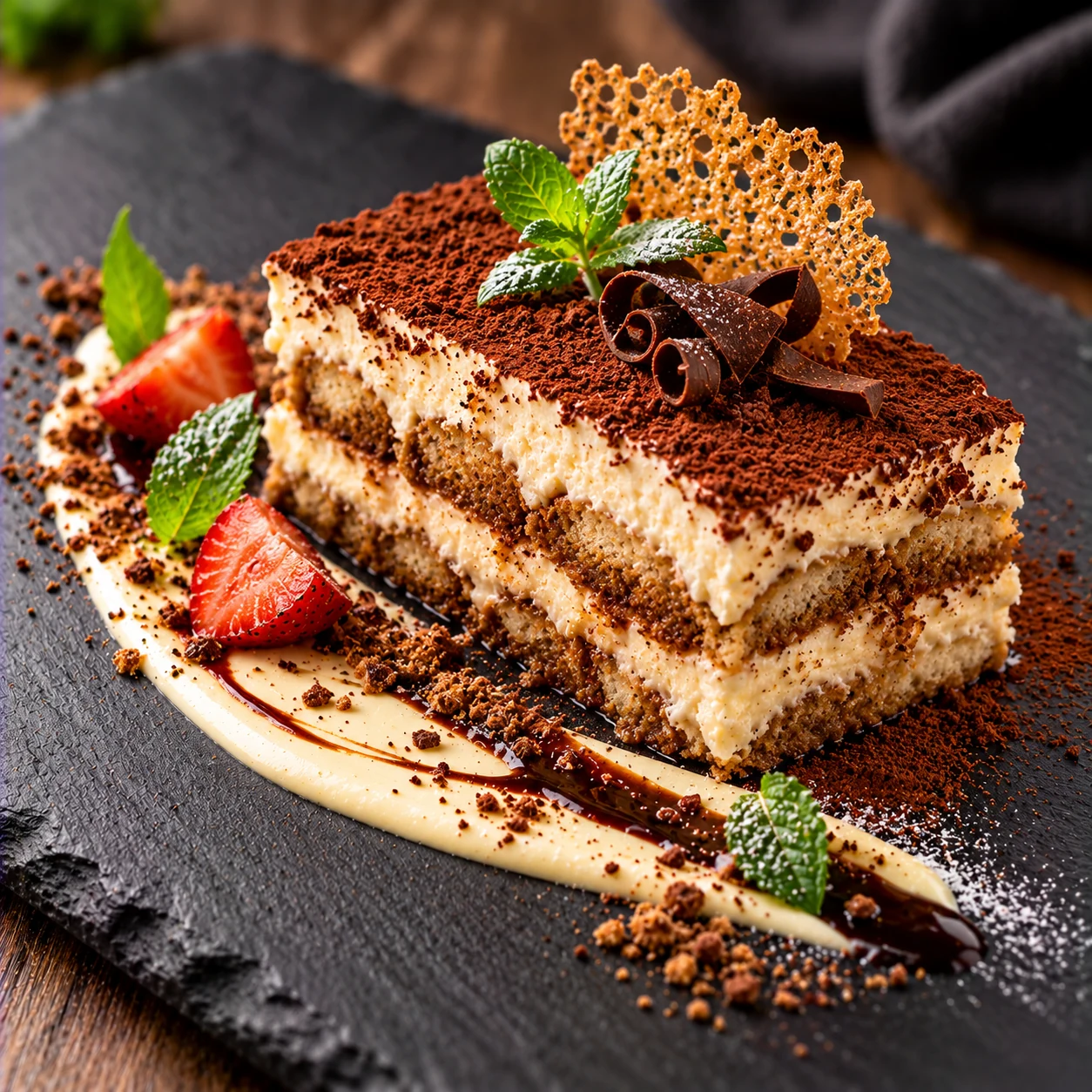
As a cut portion
Cut well-chilled tiramisu with a clean knife and transfer it with a palette knife. Wipe the knife between cuts. Offset the portion slightly with its layers facing the guest.
Clean edges. Controlled cocoa. Cream as an accent.
Tiramisu combines soft layers with dark cocoa. A defined portion and a few precise accents keep the plate from feeling heavy or busy.

Cut well-chilled tiramisu with a clean knife and transfer it with a palette knife. Wipe the knife between cuts. Offset the portion slightly with its layers facing the guest.
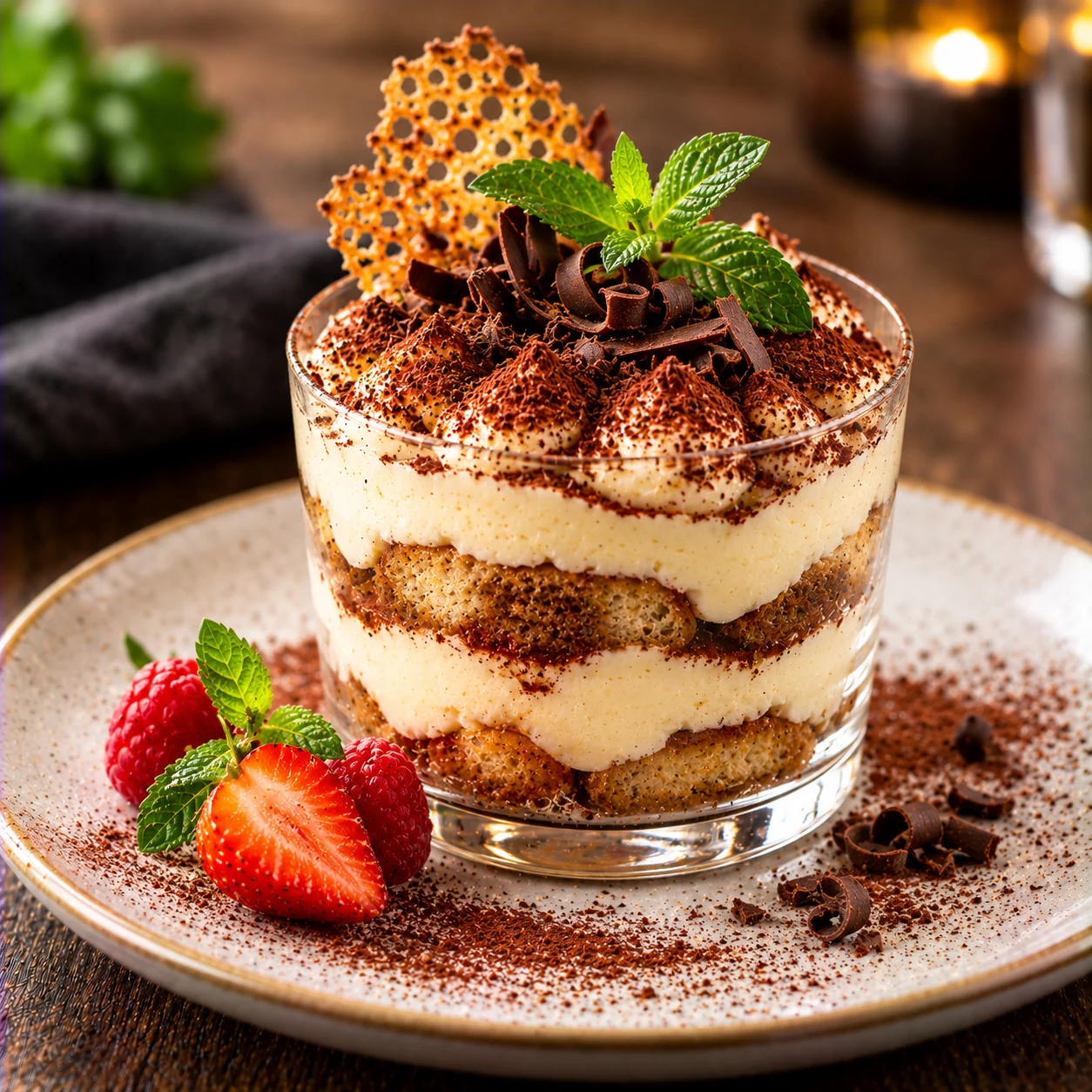
Build the layers in a suitable glass and keep its rim clean. Place it on an underplate with an appropriate spoon. A very narrow glass makes eating difficult and hides the layers.
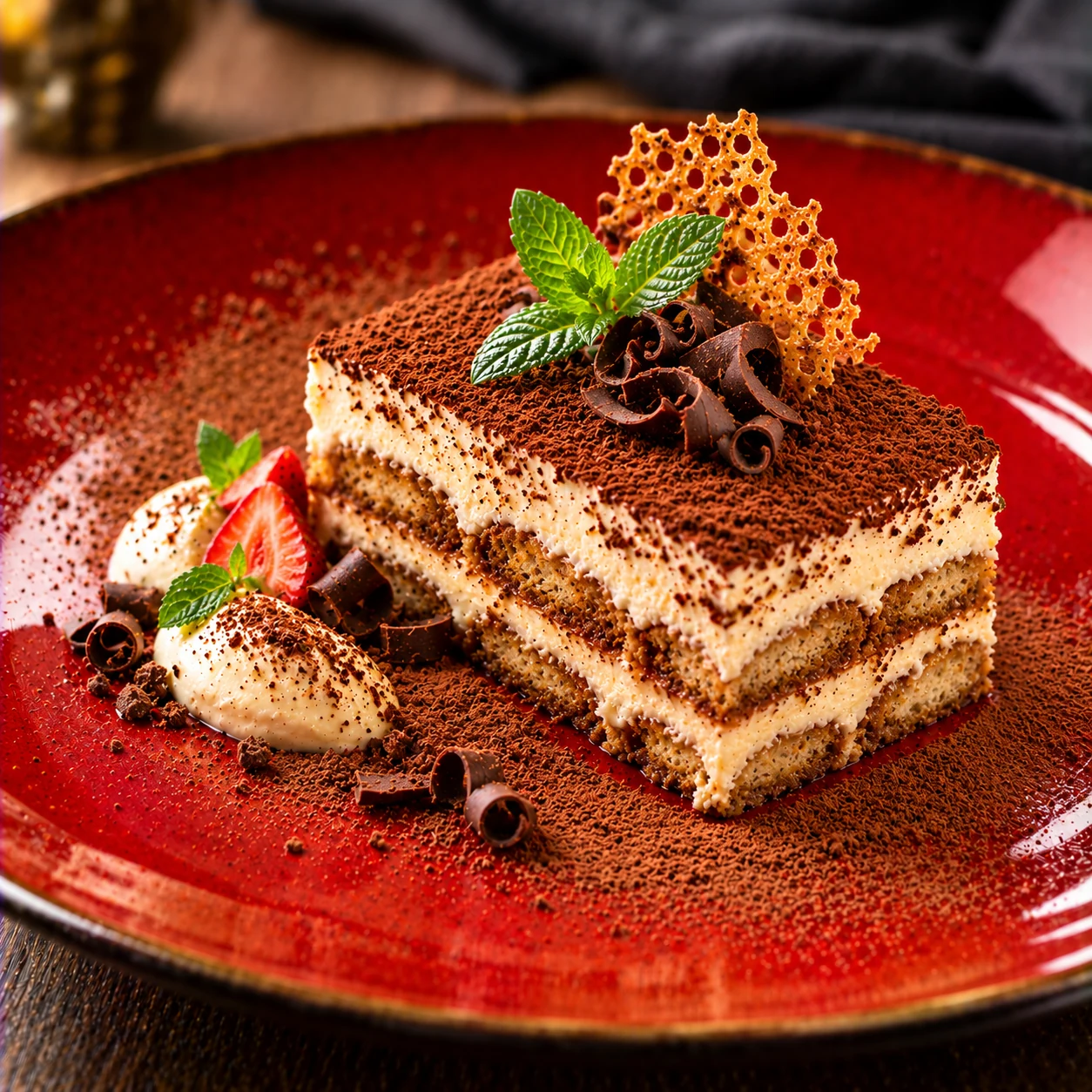
Dust cocoa thinly just before serving. Avoid coating the whole plate; a clean portion looks clearer than a dusty rim. Add coffee or chocolate elements only when they are part of the dessert.

Spoon a small sauce pool beside the portion before transferring the tiramisu. Do not put very thin sauce under the entire portion, where it can soften the lower layers. A clean cut is enough even without sauce.
A clean slice or deliberately shaped portion becomes the obvious focal point.
Keep cocoa on the dessert or within a defined area instead of dusting the entire plate.
A small quenelle or a few dots contrast with a rectangular main portion.
Visible plate surface is especially effective beside dark cocoa and coffee tones.
Chill it thoroughly, use a sharp knife and clean the blade between cuts.
Cocoa, chocolate, coffee, mascarpone cream and a suitable crunch make more sense than unrelated herbs or flowers.
Selected tools for plating this dish.
As an Amazon Associate I earn from qualifying purchases.
Describe your main ingredient, sides and sauce. PlatingStudio creates three personalised plating ideas with step-by-step guidance.