
01
As a loose nest
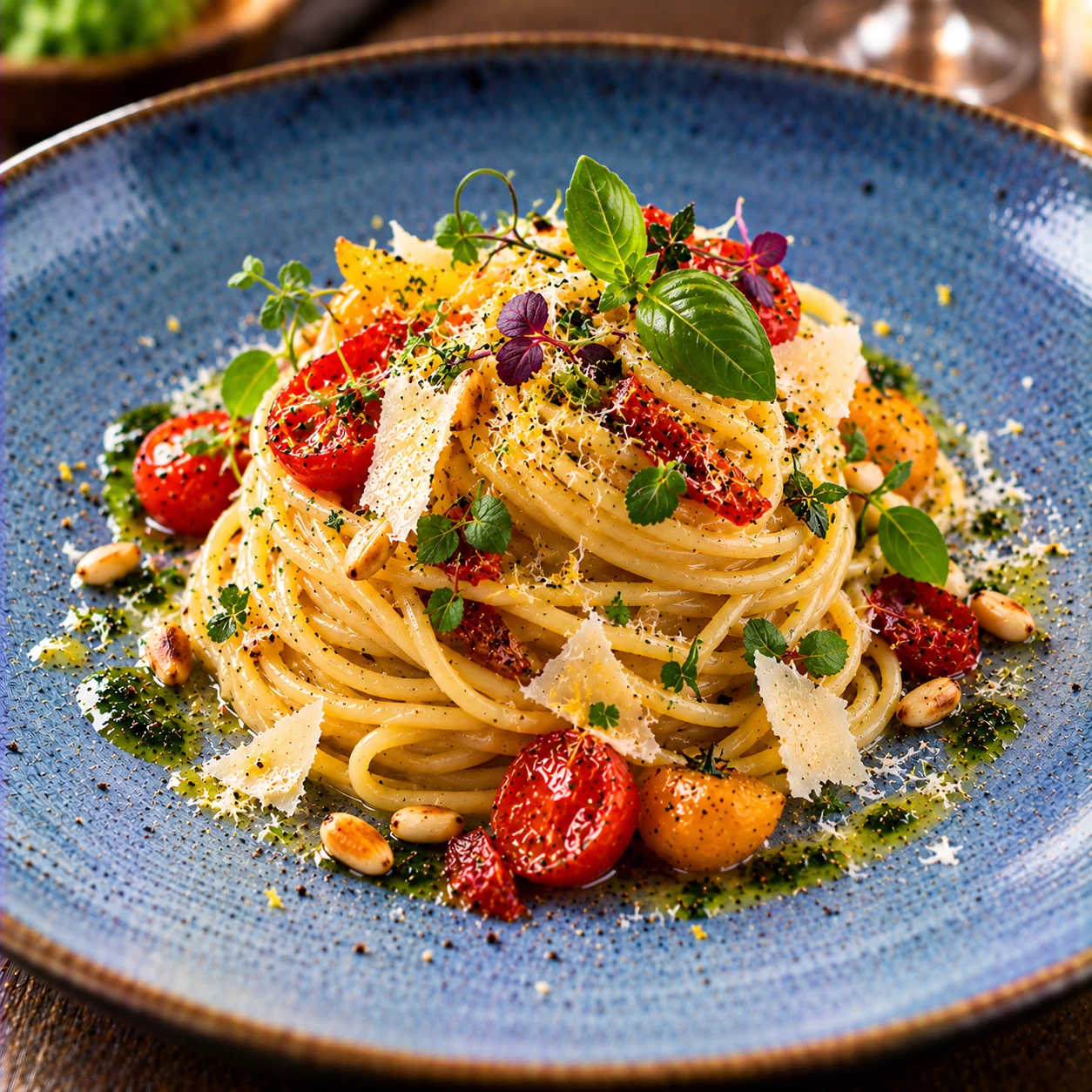
Coat spaghetti with sauce in the pan. Use tongs and a large ladle to turn a portion into a loose nest, then set it in a warm shallow bowl. Lift the tongs upwards and tuck stray strands back.
Twirl. Build height. Finish cleanly.
Shape makes the biggest difference. Instead of spreading spaghetti wide, twirl it into a loose high nest and place sauce and finishing elements deliberately.

Coat spaghetti with sauce in the pan. Use tongs and a large ladle to turn a portion into a loose nest, then set it in a warm shallow bowl. Lift the tongs upwards and tuck stray strands back.
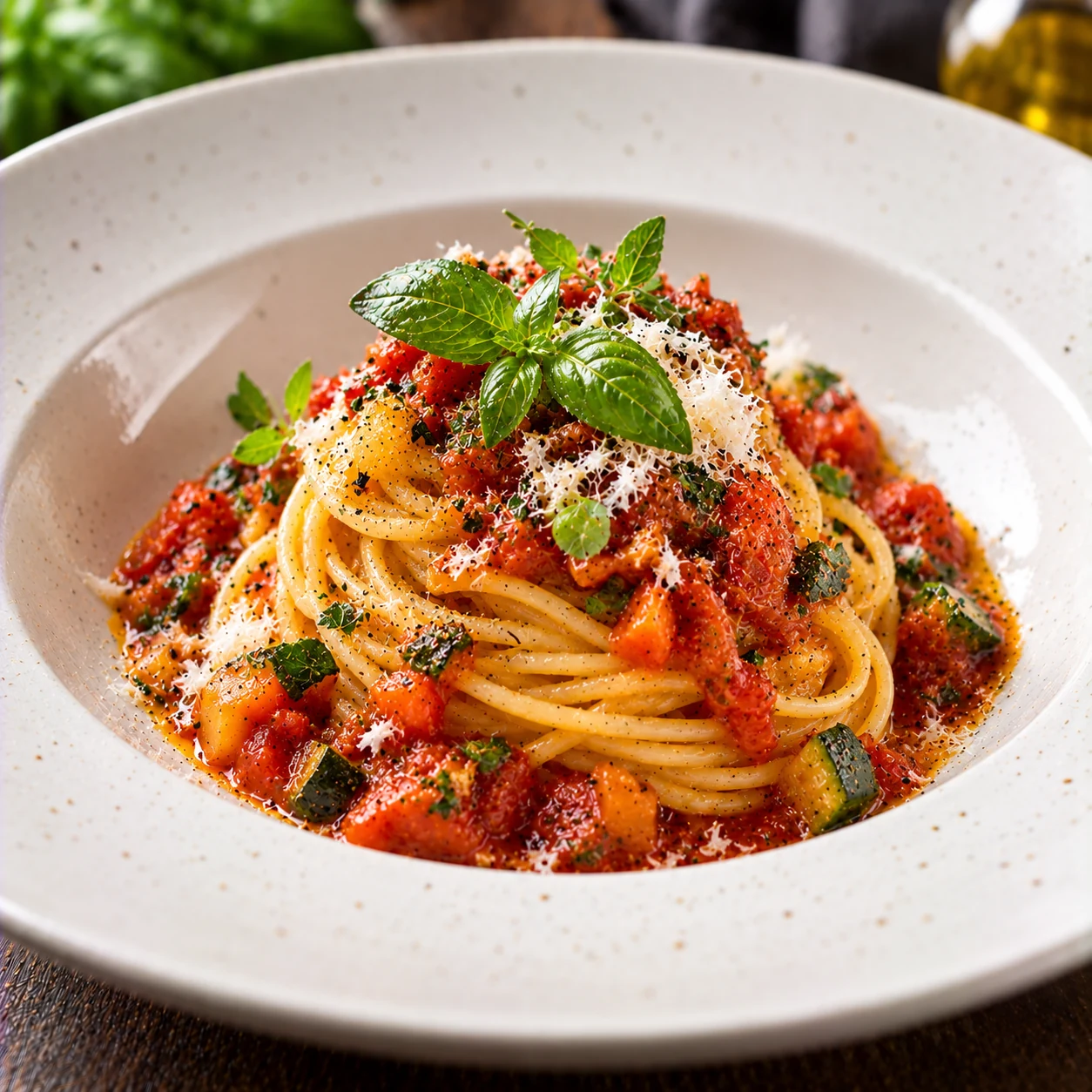
Form a compact pasta portion. Arrange chunky sauce on top and alongside it while leaving some strands visible. Do not serve the pasta dry and completely separate; sauce should also coat the noodles.
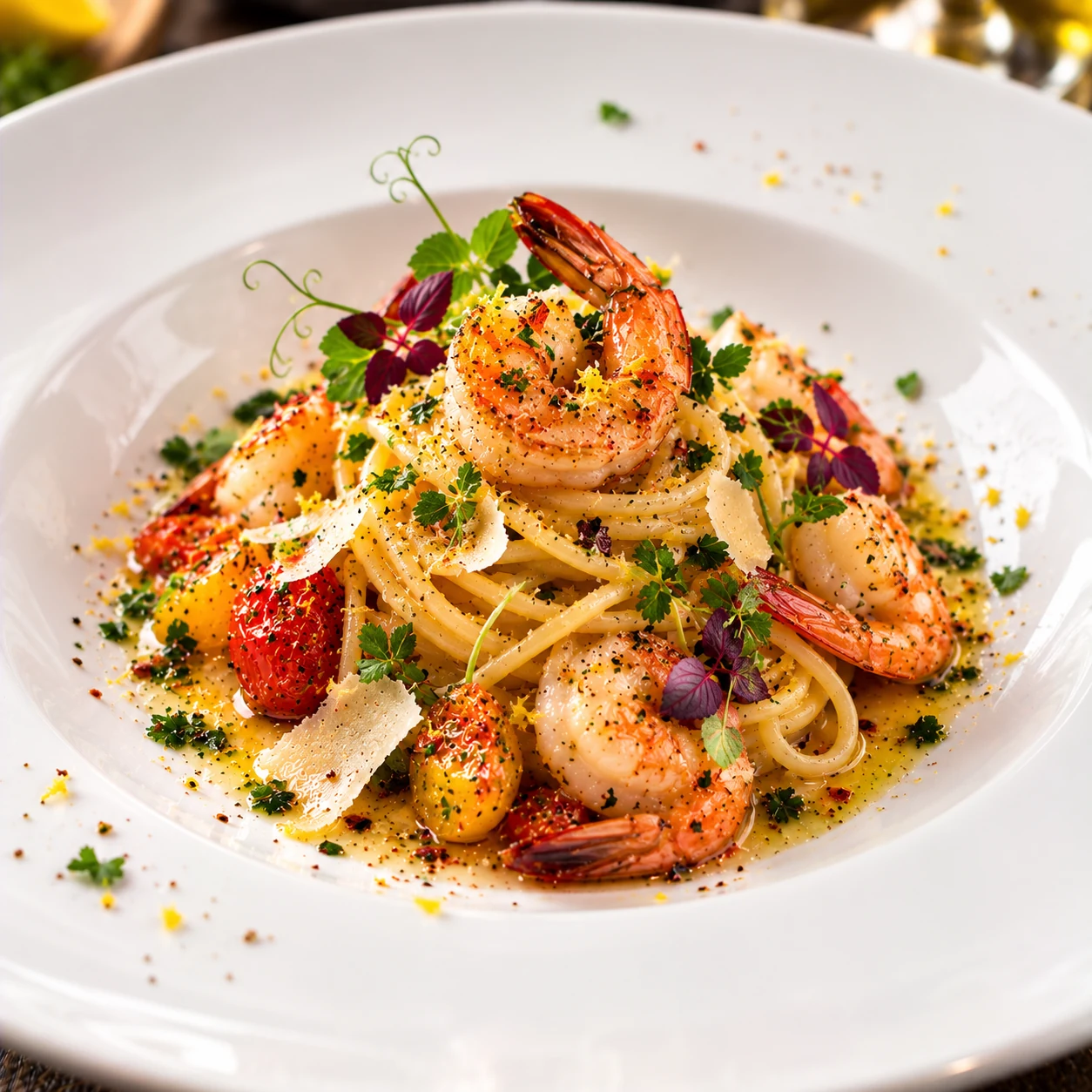
Make a low nest and arrange shrimp along one side and partly on top. Avoid tails pointing across the entire plate. Add oil or sauce sparingly around the nest.
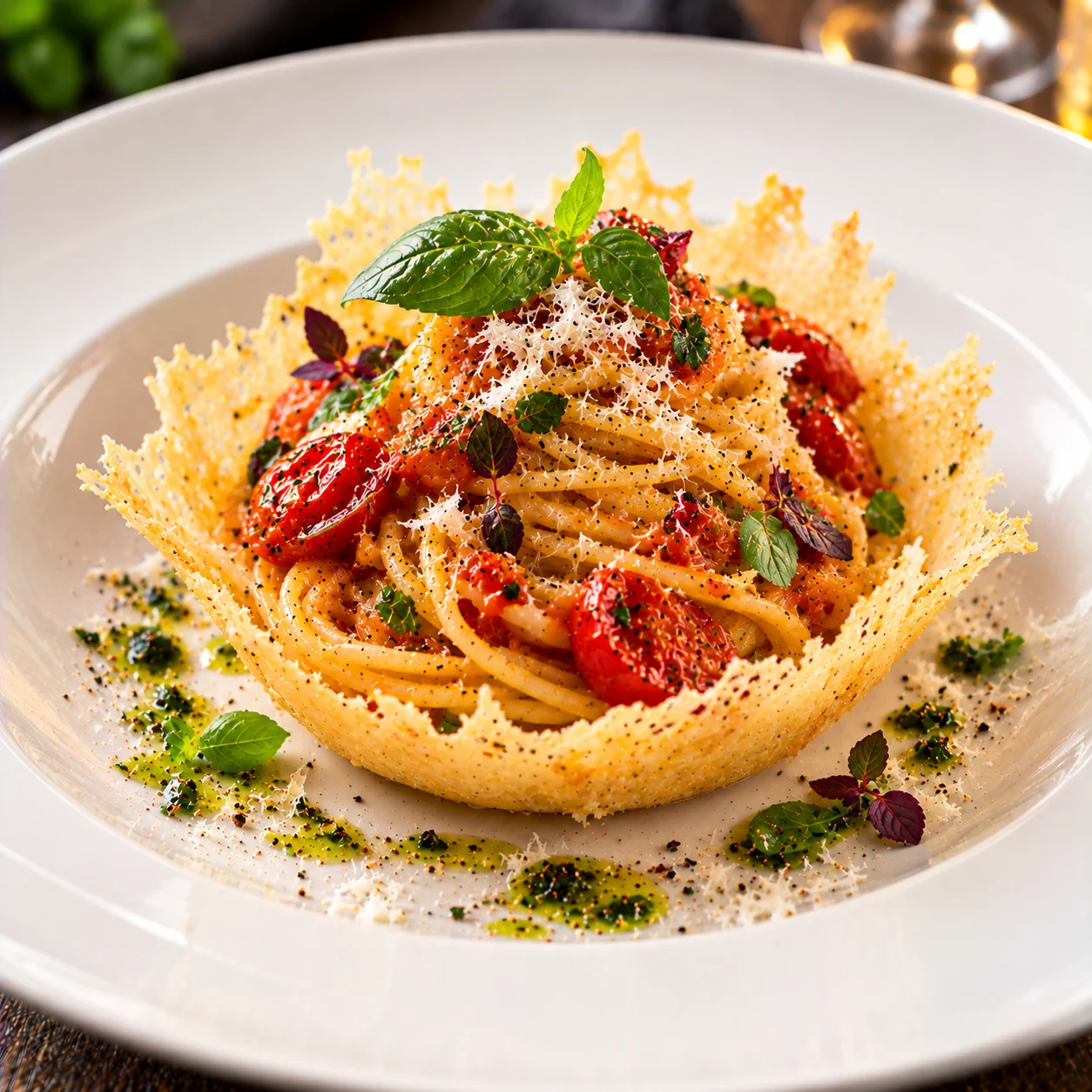
Add parmesan just before serving. A thin layer or small deliberate group is enough without hiding the pasta. Avoid compressing the nest so tightly that it is difficult to separate when eating.
Use tongs with a ladle or large fork to gather a compact portion and transfer it carefully.
Do not flatten the pasta. Loose overlapping strands create volume and structure.
Spaghetti should be glossy and flavourful without sitting in an oversized pool of sauce.
Place parmesan, herbs, pepper or crunch mainly on and close to the pasta nest.
Lift a portion with tongs, twist it in a ladle or around a large fork, then lower it gently onto the plate.
A flat plate emphasises the nest; a wide pasta bowl keeps extra sauce contained.
Selected tools for plating this dish.
As an Amazon Associate I earn from qualifying purchases.
Describe your main ingredient, sides and sauce. PlatingStudio creates three personalised plating ideas with step-by-step guidance.