
01
In a loose row
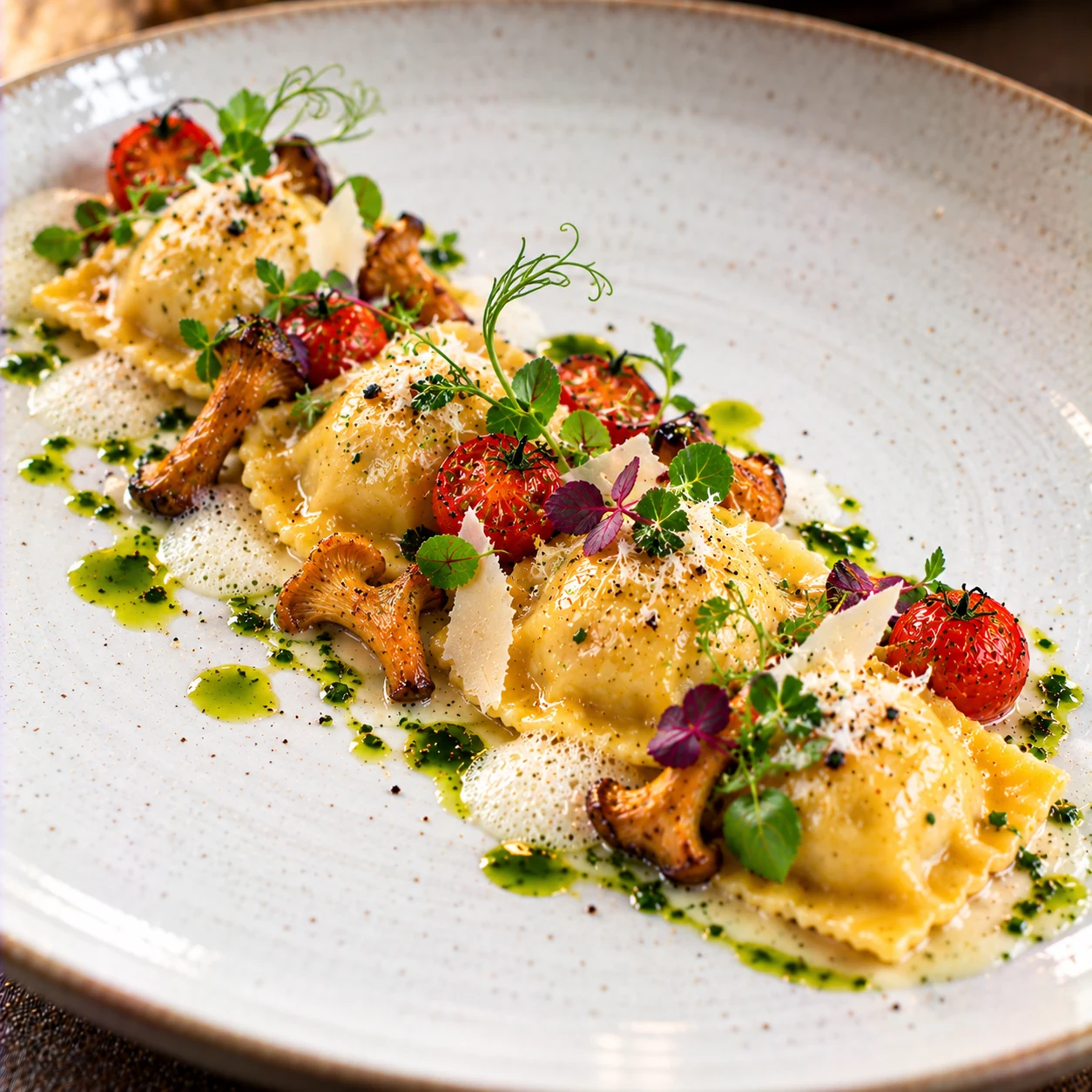
Place ravioli alongside one another with slight overlap. Keep their edges visible. Spoon sauce between pieces instead of covering every raviolo. Let portion size determine the count rather than a decorative rule.
Show each piece. Create rhythm, not a pile.
Filled pasta has a clear individual shape and should not be treated like long pasta. Spacing, repetition and sauce define the presentation.
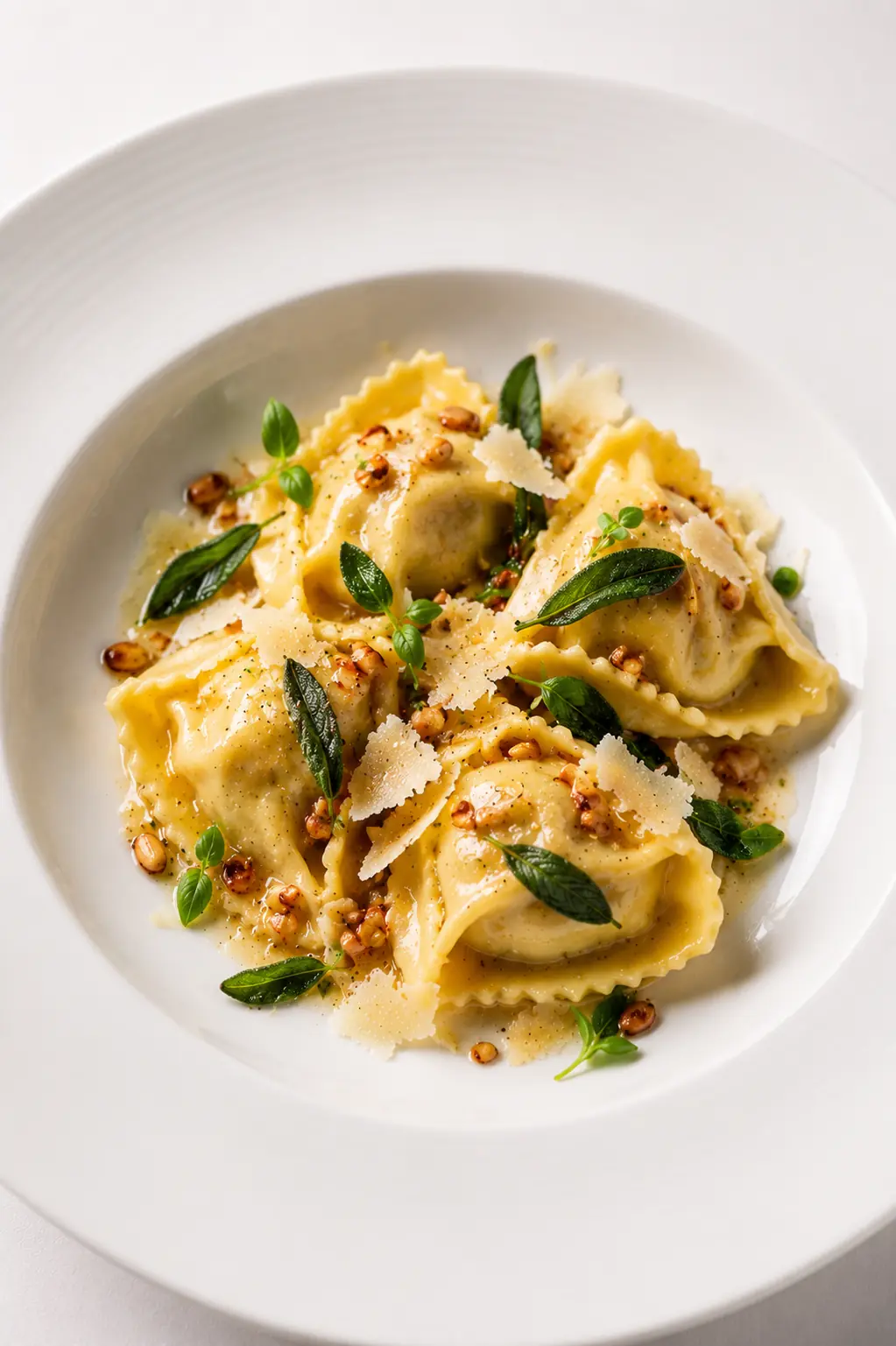
Place ravioli alongside one another with slight overlap. Keep their edges visible. Spoon sauce between pieces instead of covering every raviolo. Let portion size determine the count rather than a decorative rule.
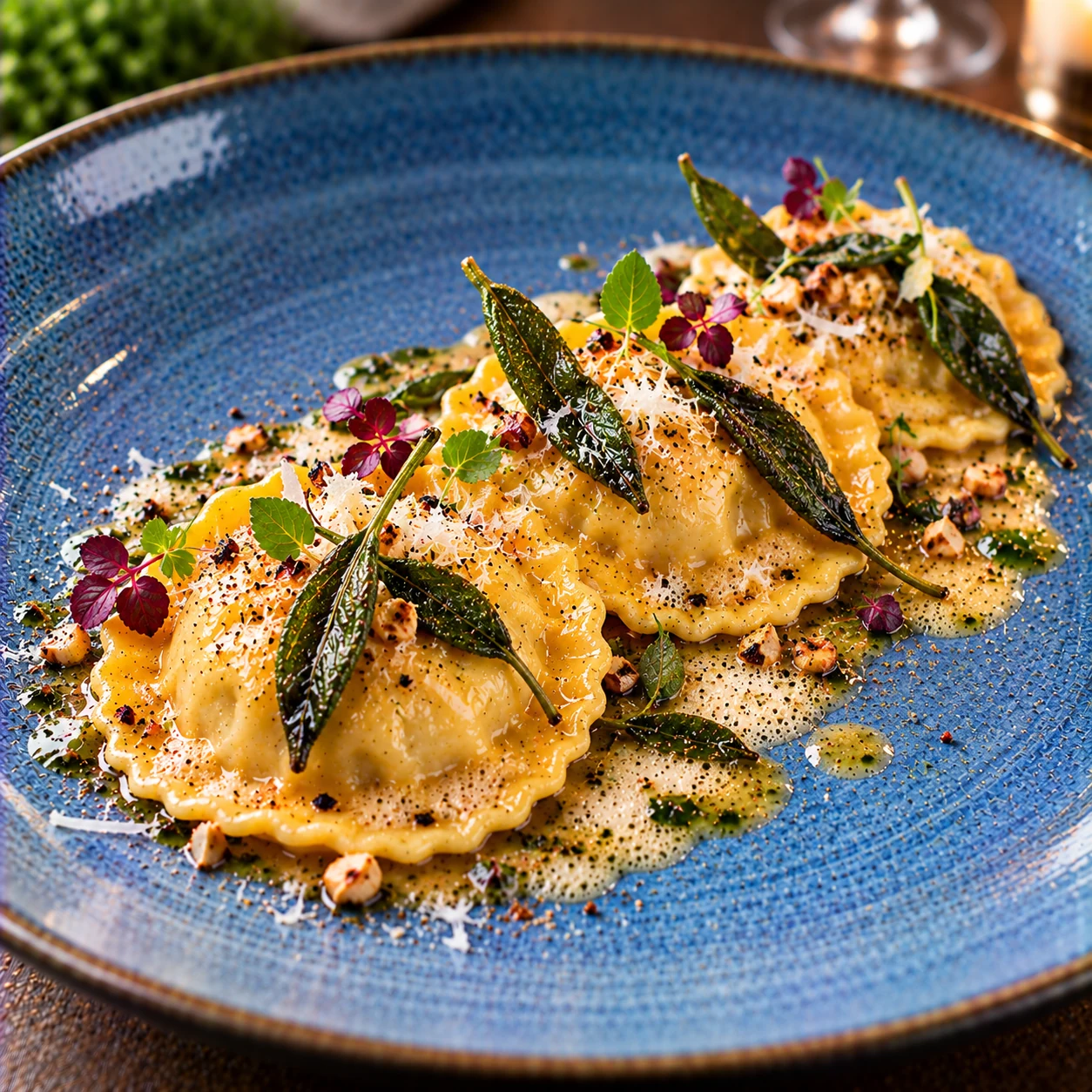
Coat the ravioli in butter before plating. Arrange a low group and distribute the sage leaves already in the dish. Add parmesan sparingly at the end so the pasta remains visible.
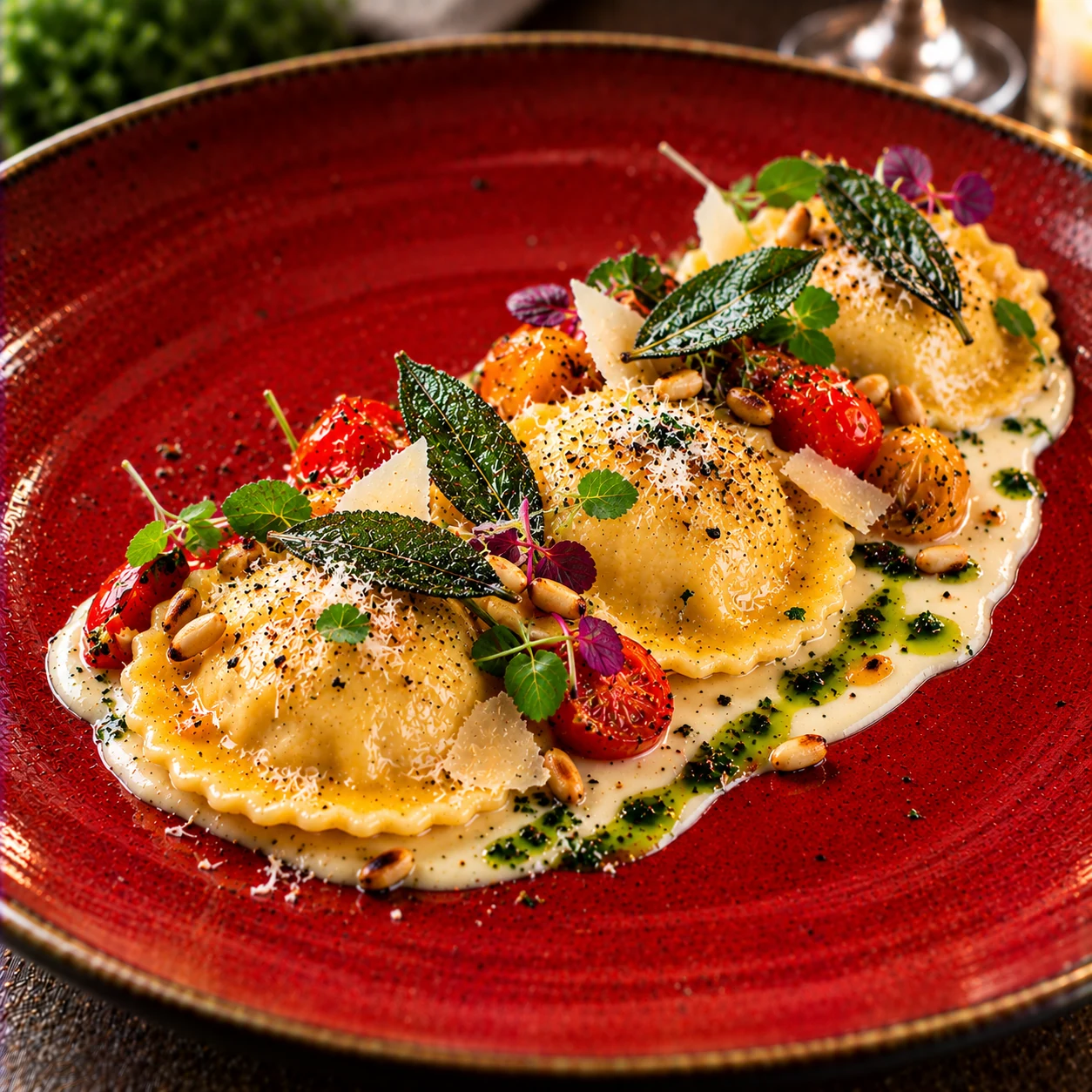
Spoon a shallow sauce base and place ravioli on top. Thin sauce spreads towards the rim, so choose a suitable shallow bowl. Avoid a high stack that is difficult to eat.
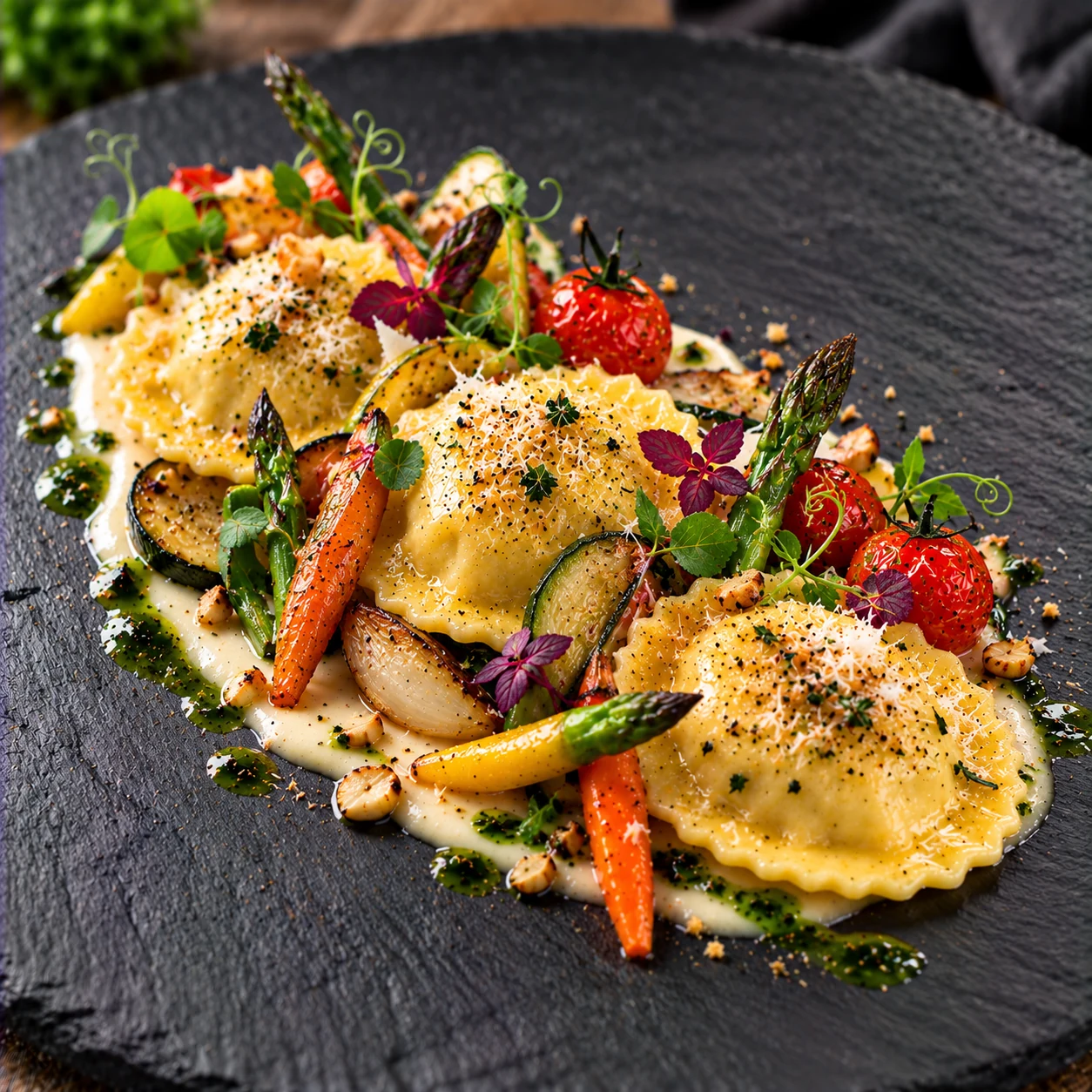
Arrange small vegetable groups between or beside the ravioli. Varied sizes create rhythm while keeping each piece accessible. Add small leaves only when they suit the filling.
Slight overlap is fine, but most of each shape and edge should remain visible.
Three, five or seven pieces can form a line, arc or loose group depending on portion size.
Guide butter, cream or sauce beneath and between the pasta instead of covering every piece.
Place sage, parmesan, nuts or herbs only where they support rhythm and flavour.
It depends on size and course. Odd-numbered groups often compose well, but correct portion size matters more.
Usually only partly, so the shape, filling contour and surface remain visible.
Selected tools for plating this dish.
As an Amazon Associate I earn from qualifying purchases.
Describe your main ingredient, sides and sauce. PlatingStudio creates three personalised plating ideas with step-by-step guidance.